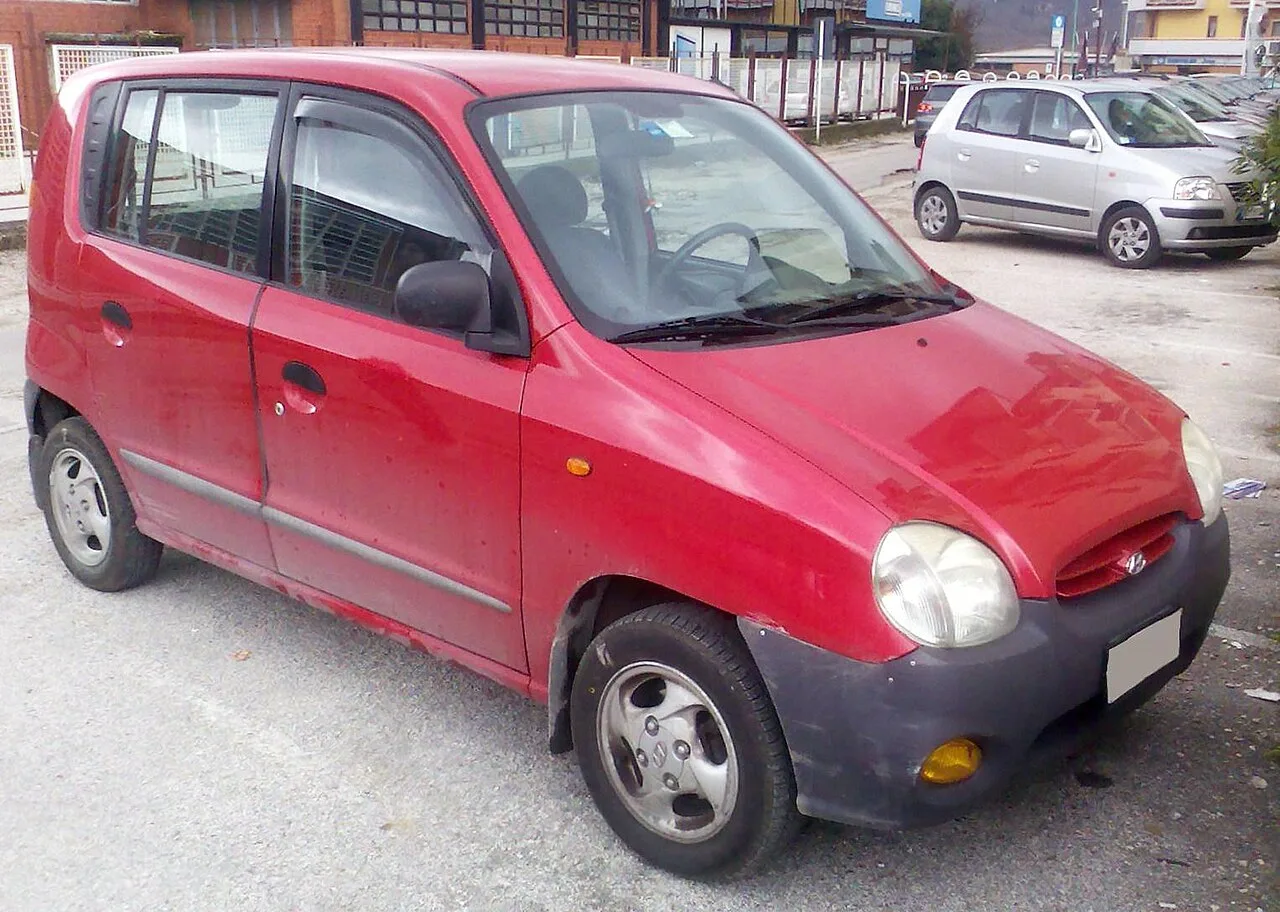
Hyundai raced the Atos to market to answer Daewoo’s head start in city cars: just 23 months from blank sheet to production, for a $155 million investment.
Lead trim: Atos 0.8 Epsilon G4HA · up to 54 hp
Hyundai Atos1997–2003
- 0spots by members
- Unclaimednobody has spotted one yet
- 0sets it belongs to
Nobody in Burbles has spotted a Hyundai Atos yet. See one on the street, point the app at it, and the first card is yours — with your @handle permanently credited on this page.
FactHyundai raced the Atos to market to answer Daewoo’s head start in city cars: just 23 months from blank sheet to production, for a $155 million investment.
The Hyundai Atos is a city car produced by Hyundai from 1997 until 2014 (also marketed as the Atoz, Amica and Santro), available only as a five-door hatchback and, from 1999, in the Atos Prime version. Hyundai started the project in October 1995 and took the car from blank sheet to production in just 23 months and a total investment of 155 million dollars, on a simple front-wheel-drive platform with MacPherson front suspension and a torsion-beam rear, front disc and rear drum brakes. Released in September 1997 and less than 3.50 metres long, with a soft design and a very spacious mini-van-shaped interior with five doors and five seats, it launched with a four-cylinder 800 cc Epsilon engine approved to Korea's new restrictive emission standards, while export markets took a larger 1.0-litre Epsilon; the European version was shown at the Frankfurt show in September 1997 and sales began in March 1998, making it one of the first A-segment city cars sold in Europe with five doors (boot 263 litres, 1,064 with the rear seat folded). Hyundai also showed an Atos EV at the 1997 Frankfurt Motor Show with 24 nickel-metal-hydride batteries, a 6.6 kW on-board charger and a 129 km/h (80 mph) top speed. In India it was launched as the Santro in 1998 (production started in October 1998 in Chennai), in Indonesia as the Atoz.
Collectors Spotted in the Hyundai Atos Lineage
No member has published a public street spot of the Hyundai Atos yet — the First · Worldwide stamp is wide open.
Trims & Figures
2 published trims in the catalogue. A blank is a figure not recorded, not zero.
| Trim | Years | Engine | Power | Torque | 0–60 | Drive | Gearbox | MSRP |
|---|---|---|---|---|---|---|---|---|
| Atos 0.8 Epsilon G4HA | 1997–2003 | 0.8 L Inline-4 | 53 hp | 54 lb-ft | — | FWD | — | — |
| Atos 1.0 Epsilon G4HC | 1997–2003 | 1.0 L Inline-4 | 54 hp | 60 lb-ft | — | FWD | — | — |
Owning one
We don’t estimate running costs for a car like this. What it costs depends on its condition, its specialist and how it is driven, and an average would mislead.
Owners’ builds
Nobody has claimed one yet.
Photographs
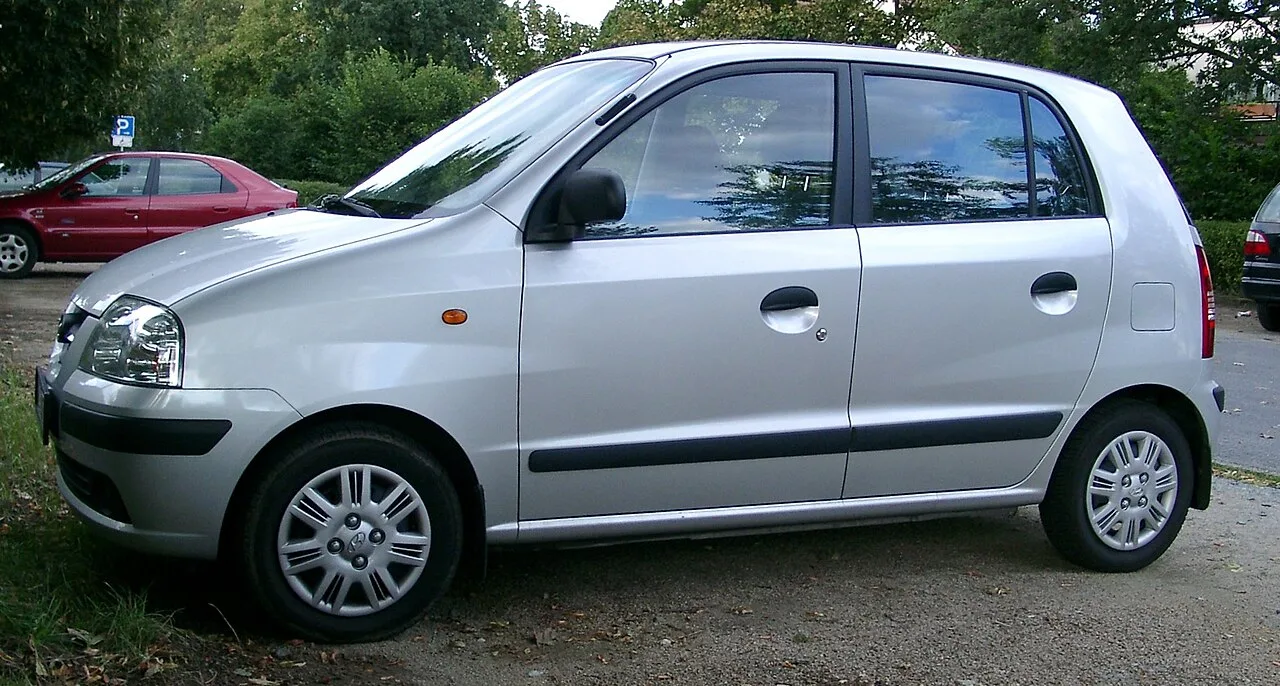
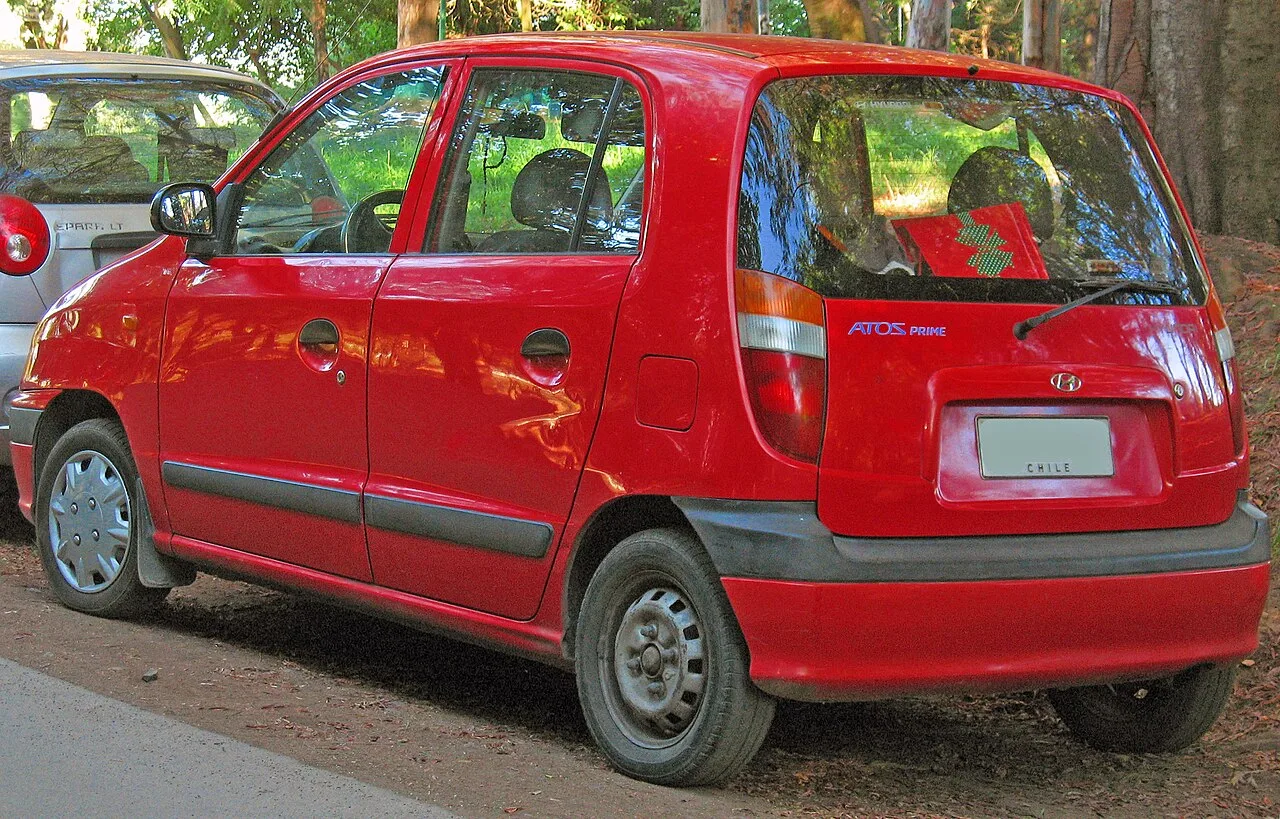
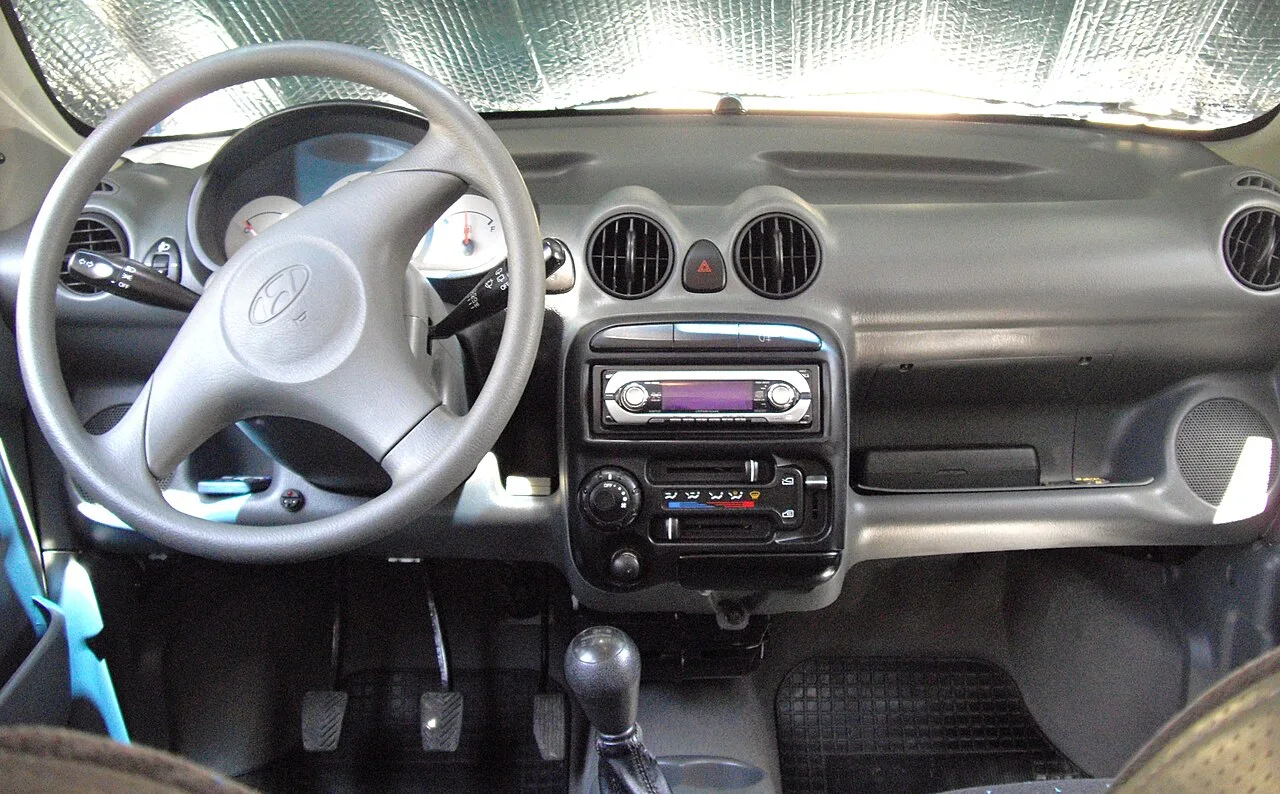
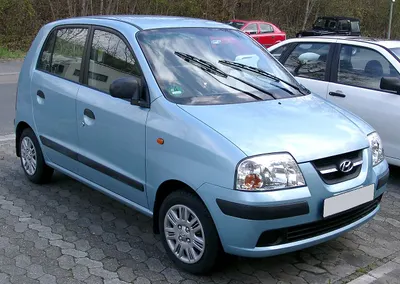
This facelifted Atos Prime looked all-new front and rear, but underneath the fresh nose, tail and lights it kept the old car's doors, side panels and interior completely unchanged.
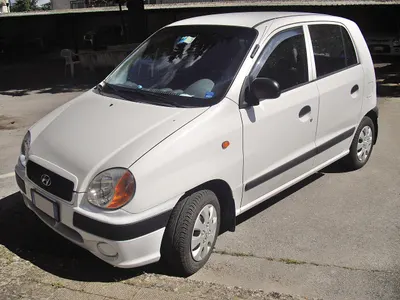
This car was originally going to be badged a Kia — but Hyundai's own European dealers fought the plan, worried it would steal sales from the Atos, so it got rebadged Atos Prime instead.
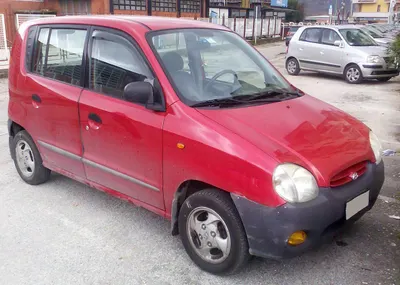
Hyundai raced the Atos to market to answer Daewoo’s head start in city cars: just 23 months from blank sheet to production, for a $155 million investment.
Rivals
Same body, same money, other badges — tap any card to flip.
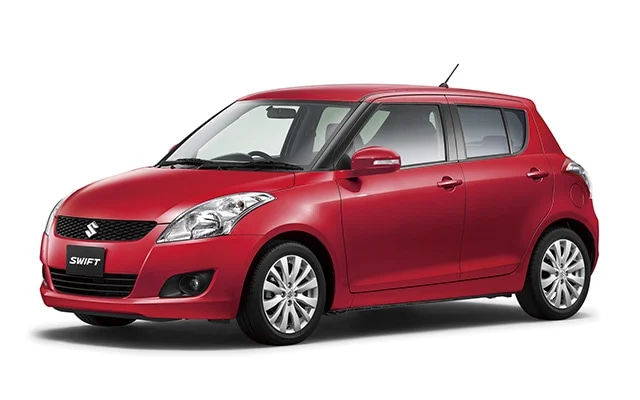
Japan was a minor market for the Swift: when it passed 2 million sales in 2011, about 39% were in India and 27% in Europe, against roughly 15% at home.
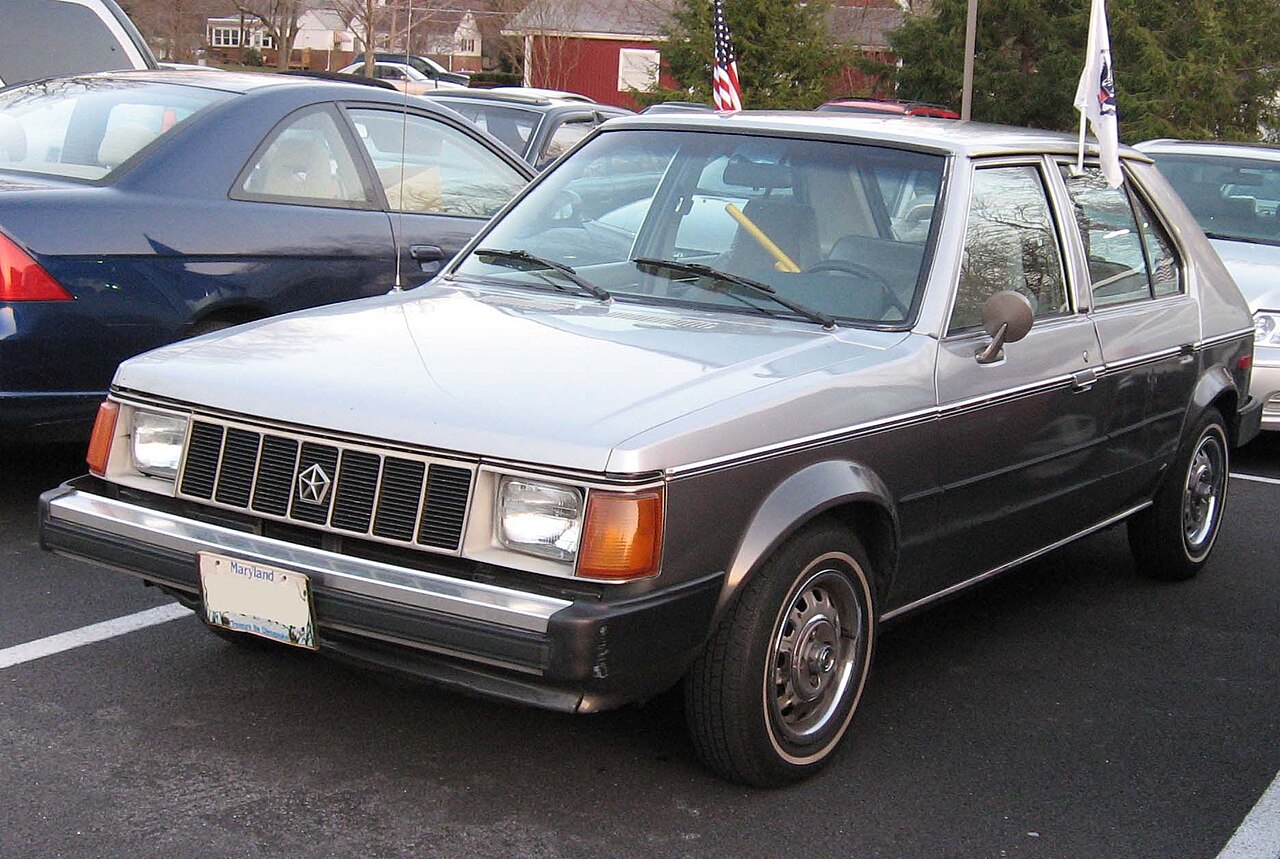
To adapt the Horizon for America, Chrysler bought nearly 100 Volkswagen Rabbits purely to reverse engineer them.
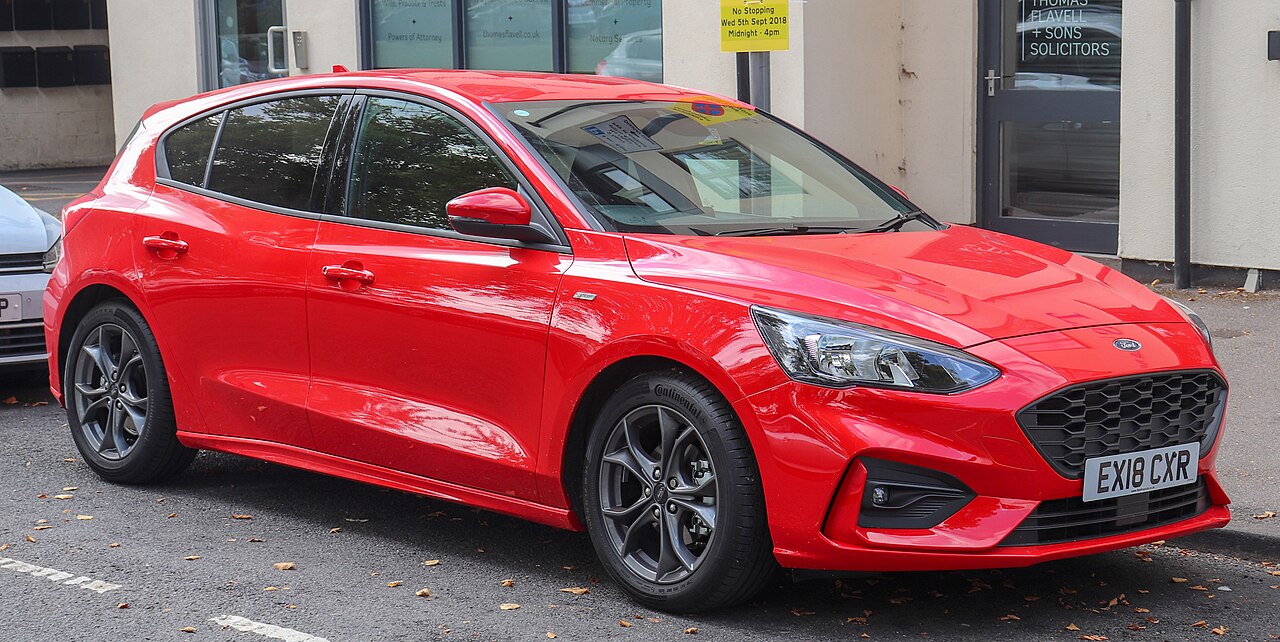
The Mk3 Focus RS's AWD system could send 100 percent of engine power to the rear wheels alone — built not in Ford's home country, but at the Saarlouis plant in Germany.
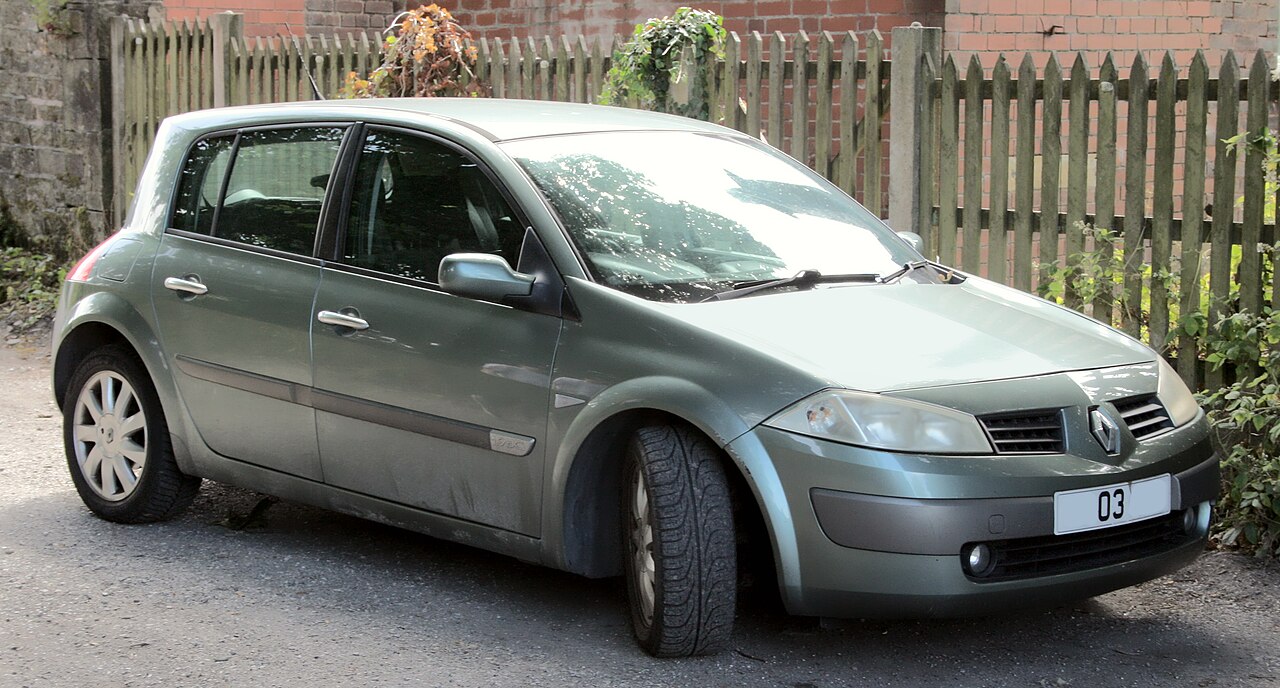
In June 2003, a Mégane II became the subject of the first ever live televised crash test with a real human driver at the wheel instead of a dummy — filmed by Top Gear.
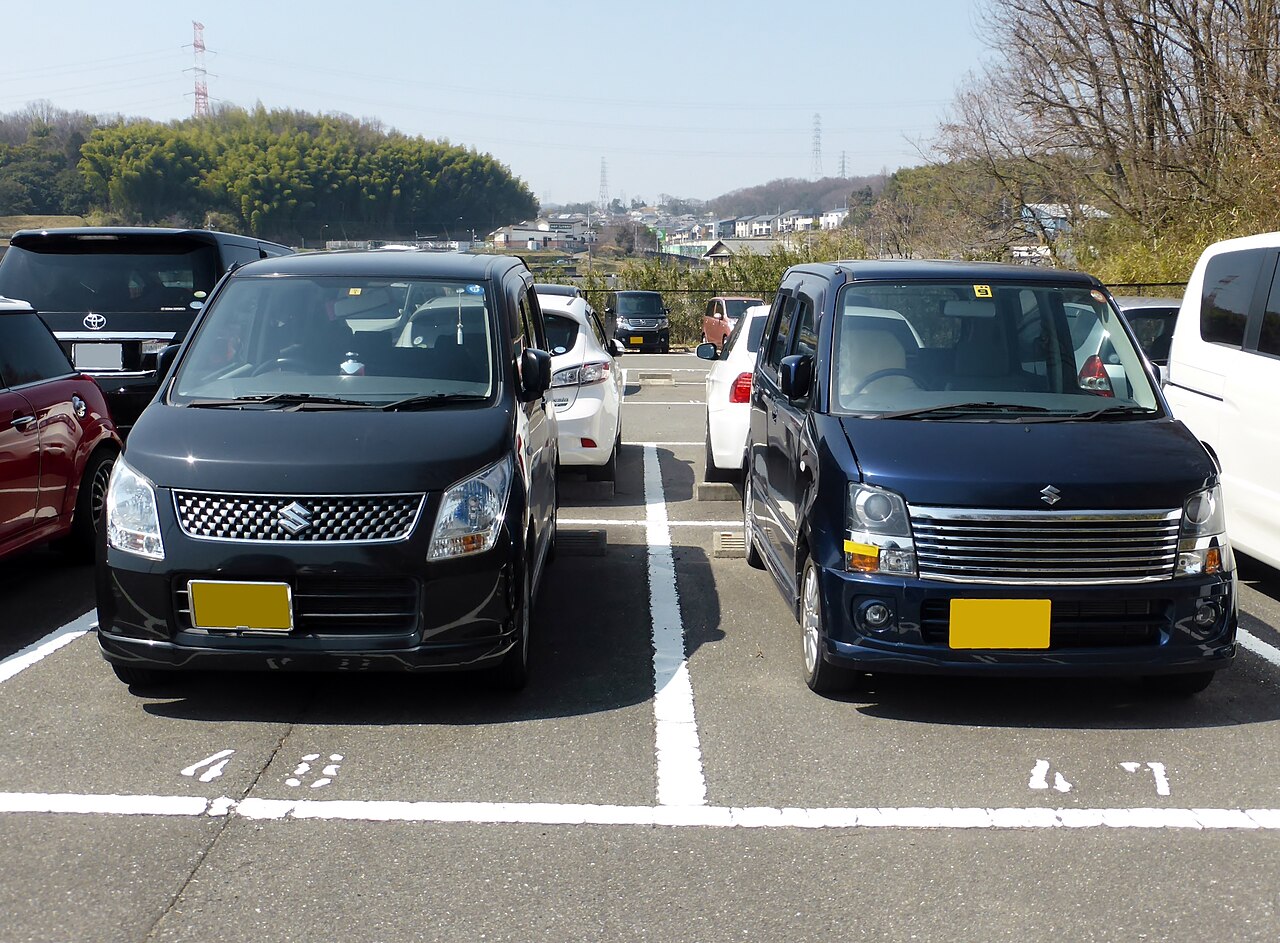
This Wagon R redesigned its rear doors specifically to kill off the D-pillar — bigger doors with built-in quarter glass solved what earlier generations needed a whole extra pillar for.
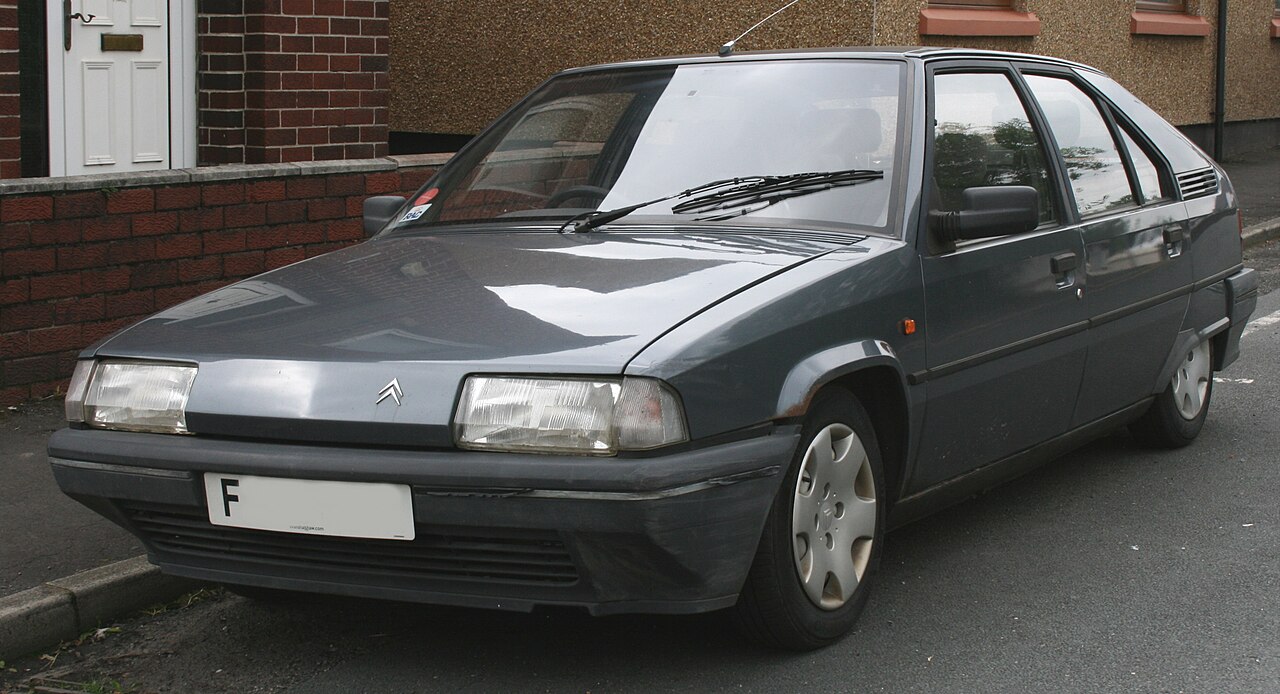
The BX was the UK's best-selling diesel car for four years from 1987, and 2,315,739 were built in all.
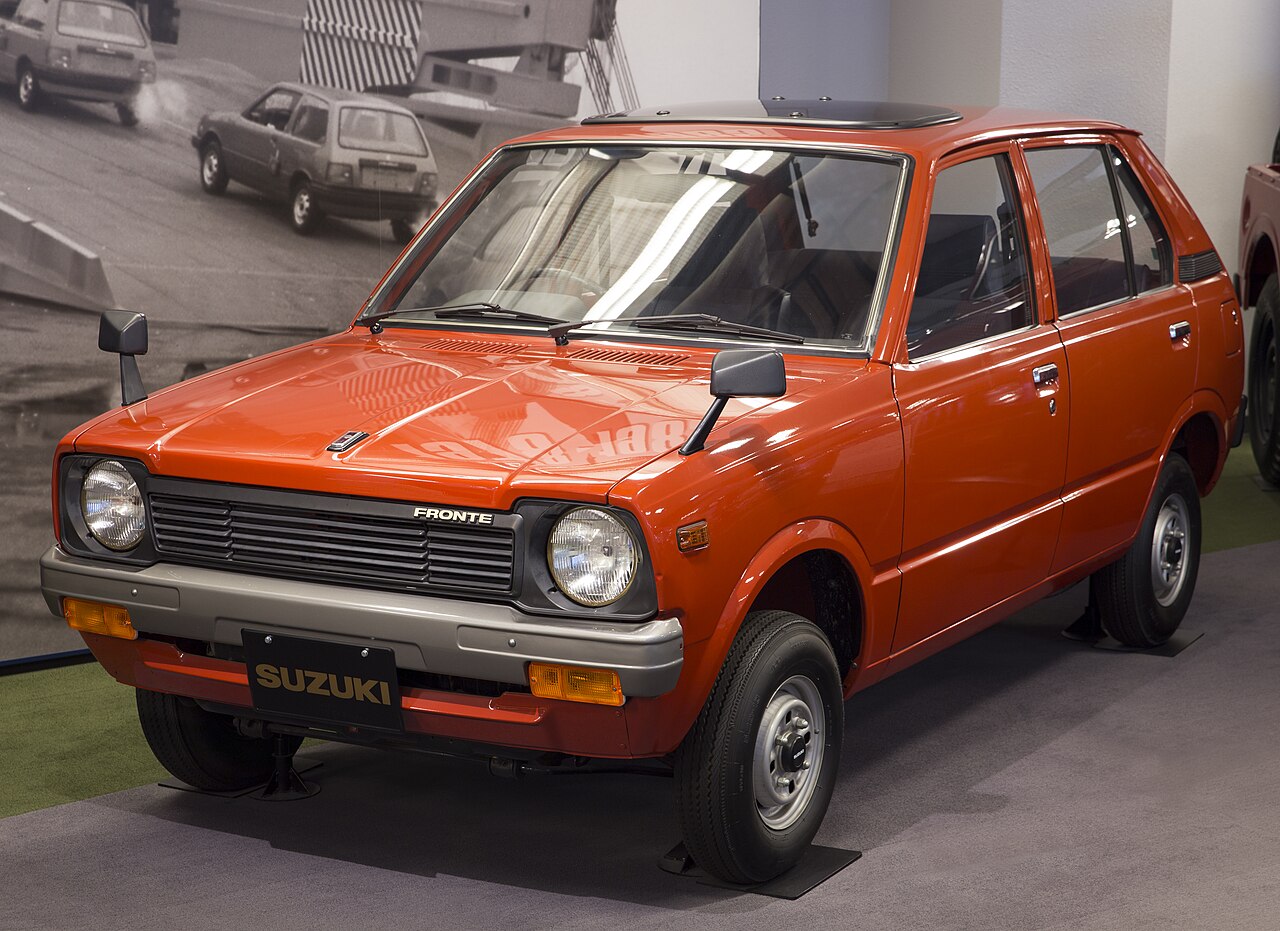
Six months before Suzuki retired the Fronte name for good, the CN11S's 796cc version was already being built in China under a completely different name: the Anchi 6330.
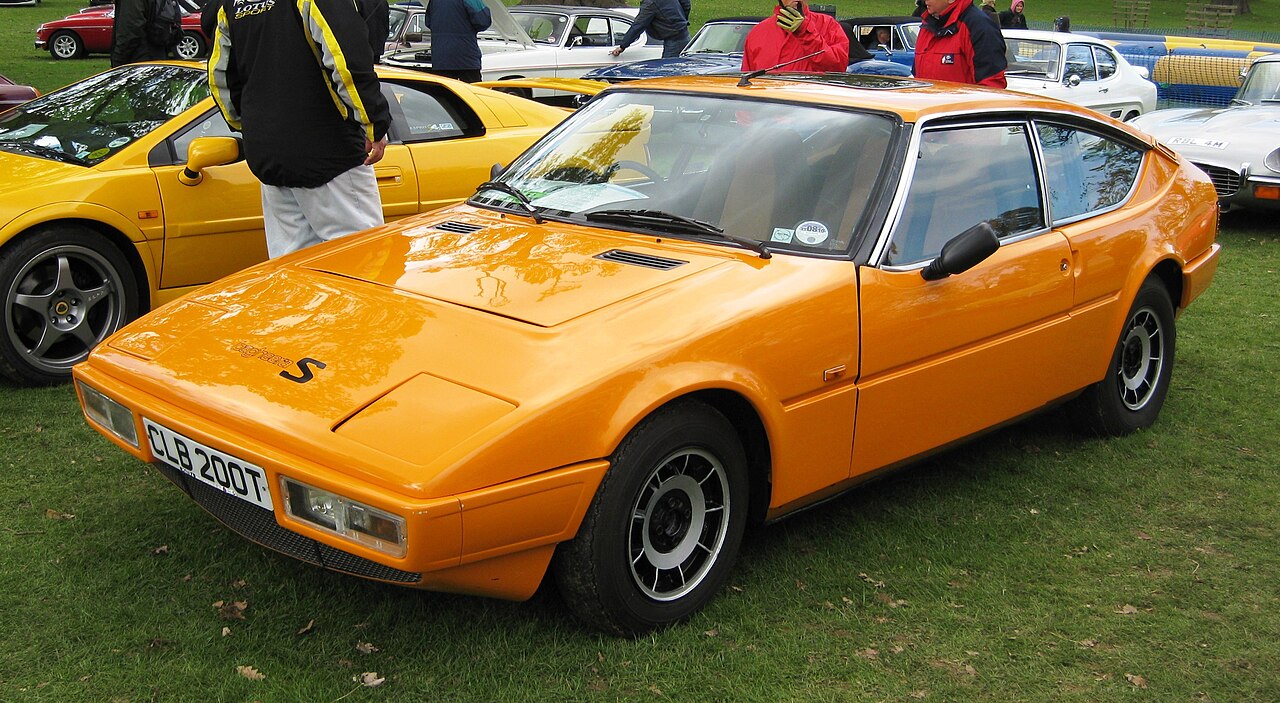
Built to use up Chrysler-Simca's parts bin, it took its engine and gearbox straight from the front-wheel-drive Simca 1100 but mounted them amidships instead.