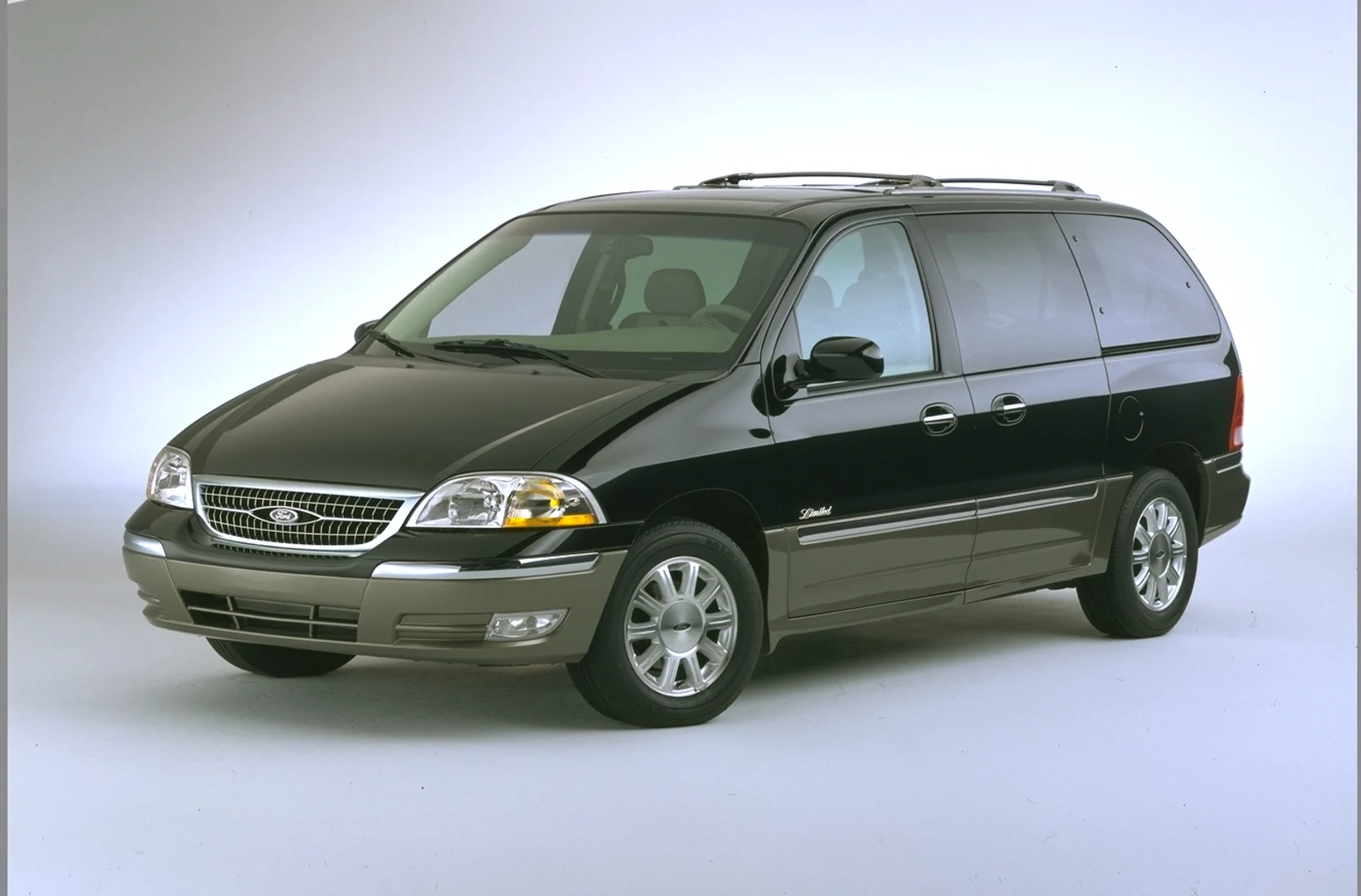
Ford's own 1999 lab tests showed heat treating would double its rear axle's life for $3.45 a part; nothing changed until 2003, and over 600,000 were later recalled.
Lead trim: 3.0 Vulcan V6
Ford Windstar second generation1999–2003
- 0spots by members
- Unclaimednobody has spotted one yet
- 0sets it belongs to
Nobody in Burbles has spotted a Ford Windstar second generation yet. See one on the street, point the app at it, and the first card is yours — with your @handle permanently credited on this page.
FactFord's own 1999 lab tests showed heat treating would double its rear axle's life for $3.45 a part; nothing changed until 2003, and over 600,000 were later recalled.
Released in the summer of 1998 as an early 1999 model, the Ford Windstar was completely redesigned, one of the first Ford vehicles in North America with New Edge styling, and gained a driver's-side sliding door. Ford moved it to a dedicated chassis architecture, the V platform, while keeping mechanical commonality with the Taurus and Sable, and introduced features such as seat-mounted side airbags, dual power-sliding doors and rear reverse sensors. It was built in Oakville, Ontario, with 3.0 and 3.8 litre V6 engines, until July 2003; the Freestar replaced it.
Collectors Spotted in the Ford Windstar Lineage
No member has published a public street spot of the Ford Windstar yet — the First · Worldwide stamp is wide open.
Trims & Figures
2 published trims in the catalogue. A blank is a figure not recorded, not zero.
| Trim | Years | Engine | Power | Torque | 0–60 | Drive | Gearbox | MSRP |
|---|---|---|---|---|---|---|---|---|
| 3.0 Vulcan V6 | 1999–2003 | 3.0 L V6 | — | — | — | FWD | — | — |
| 3.8 Essex V6 | 1999–2003 | 3.8 L V6 | — | — | — | FWD | — | — |
Owning one
An estimate, for the 3.0 Vulcan V6 trim: fuel on its EPA figure and a dated national price, upkeep on a per-mile average for the kind of car it is.
Owners’ builds
Nobody has claimed one yet.
Photographs
Ford's own 1999 lab tests showed heat treating would double its rear axle's life for $3.45 a part; nothing changed until 2003, and over 600,000 were later recalled.
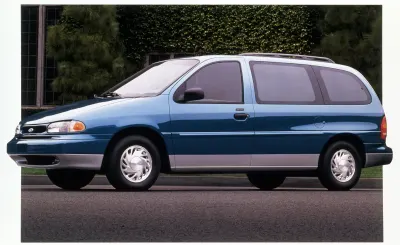
Focus groups said a driver-side sliding door didn't matter, so it had none; Ford later stretched the driver's door instead and called it the "king door".
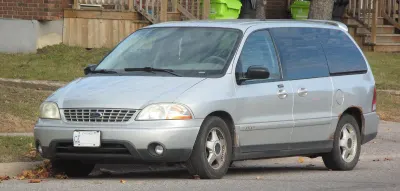
Ford handed the Windstar’s design to a women-led engineering team, who built it around scenarios most minivans ignored — pregnant drivers, women in skirts and heels — not just cupholder counts.
Rivals
Same body, same money, other badges — tap any card to flip.
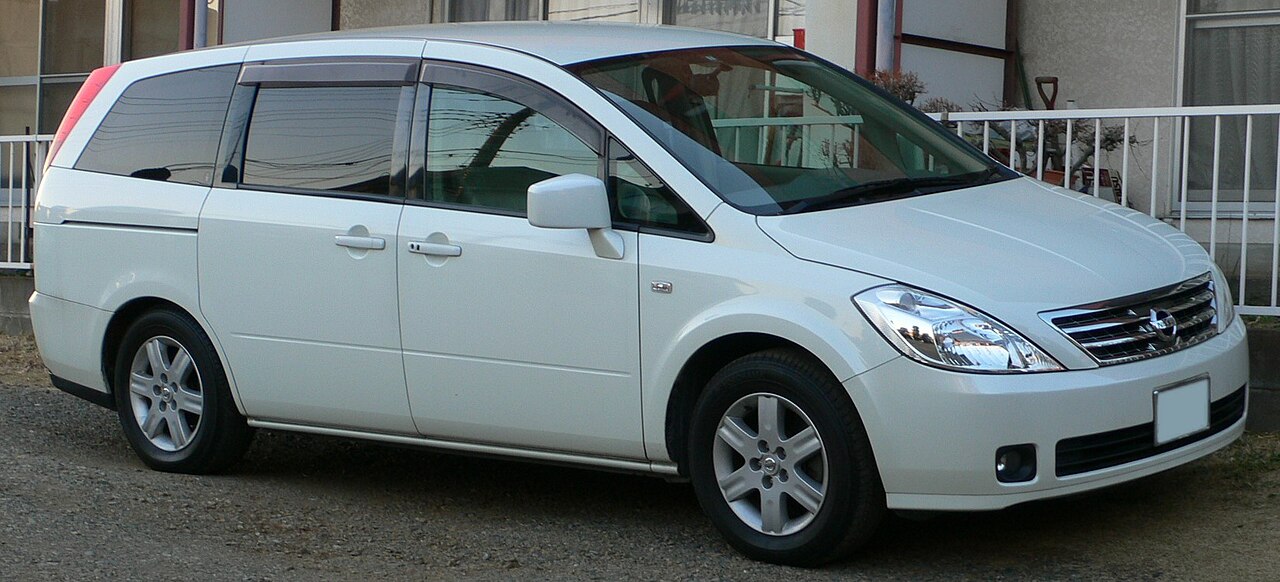
This Presage minivan shares its underlying platform with the Teana sedan and the North American Murano crossover — one architecture doing three very different jobs.
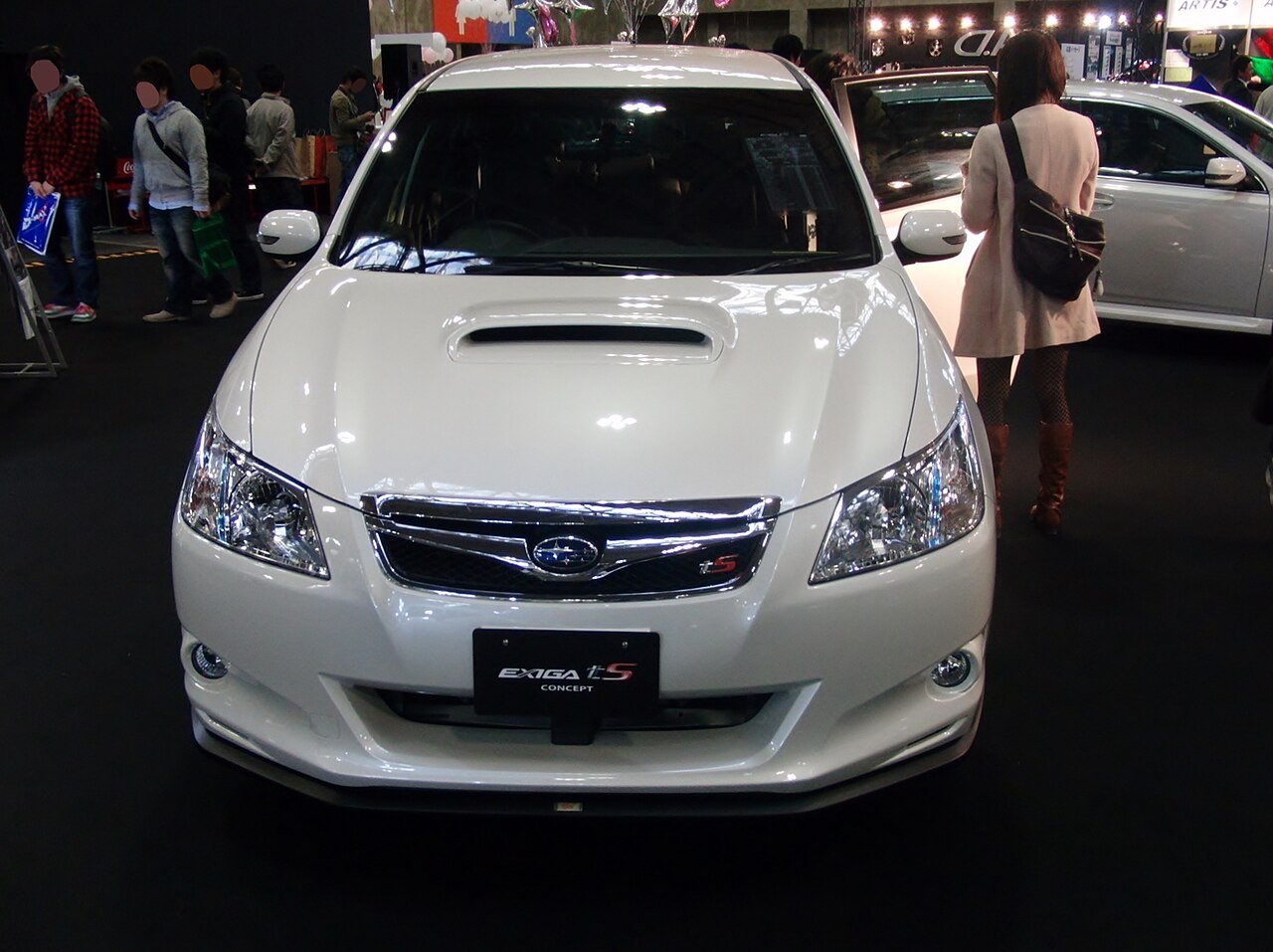
Subaru's family-hauling Exiga got an unlikely STi treatment in 2009 — front spoiler, sport muffler, tighter suspension and a leather Momo wheel — but only 300 were ever built.
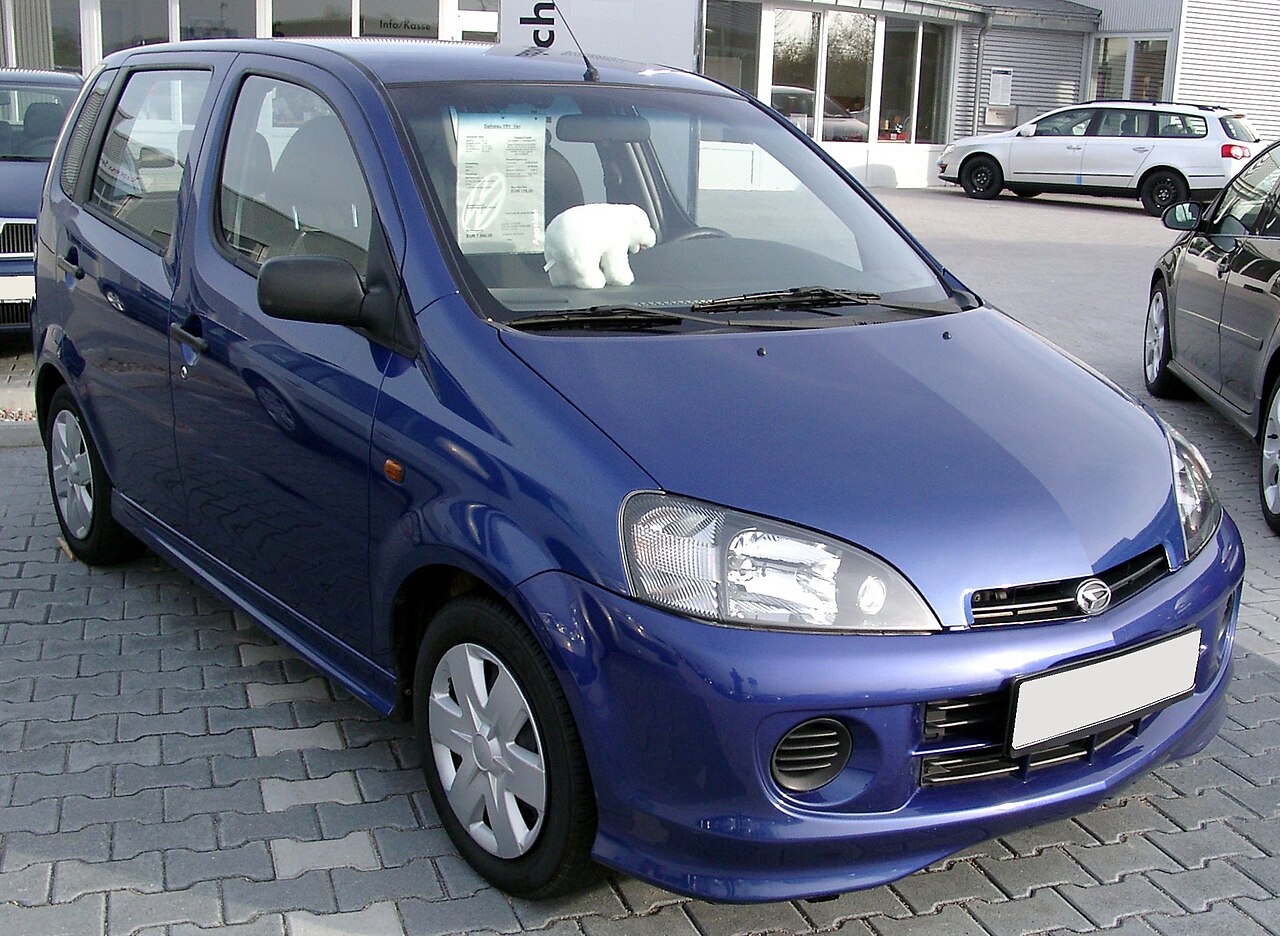
YRV stands for Young Recreational Vehicle, a mini MPV built to out-handle its own segment rivals.
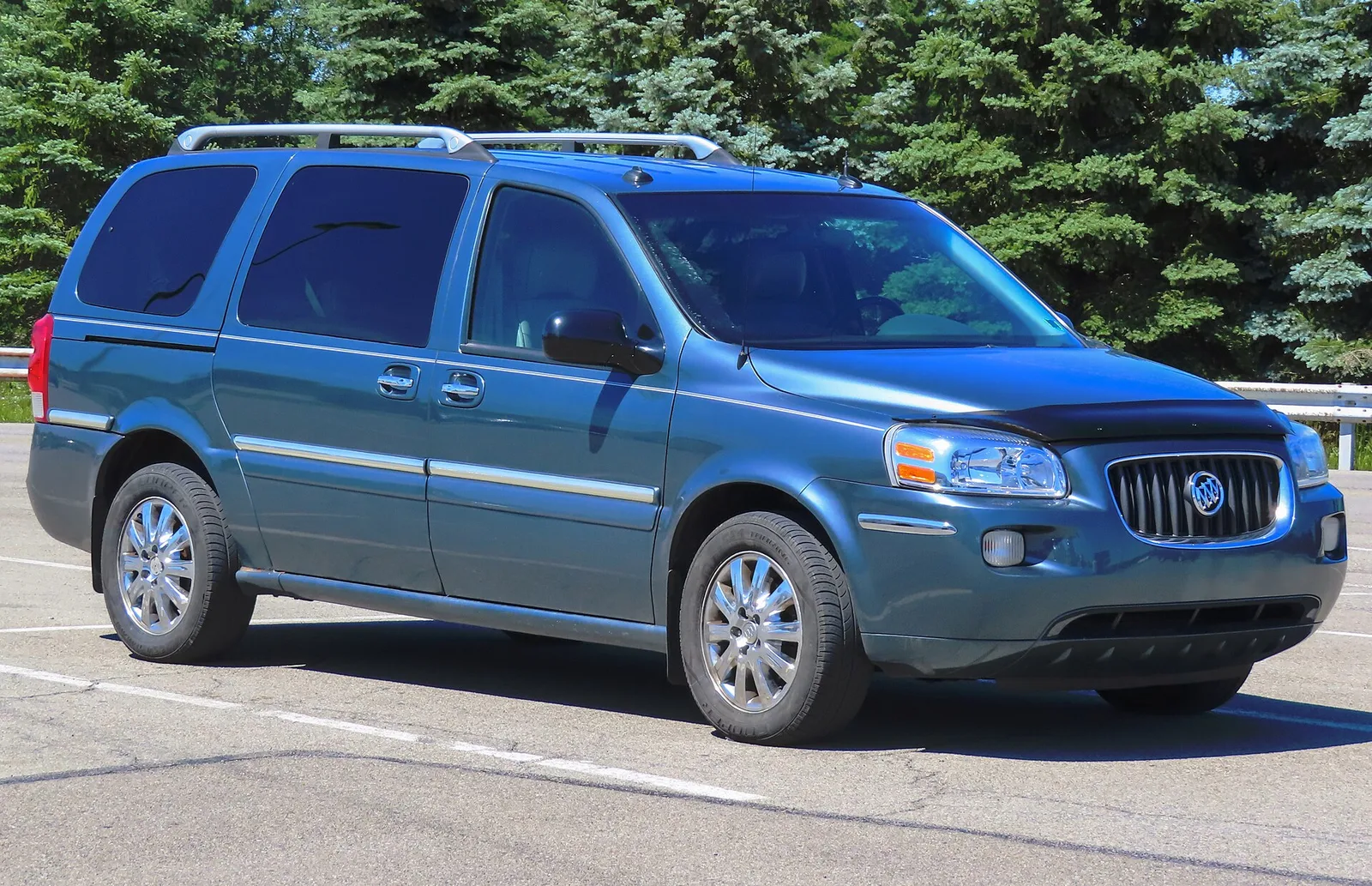
The Terraza was Buick's first-ever minivan for the North American market - a badge-engineered cousin of the Chevrolet Uplander, Pontiac Montana SV6, and Saturn Relay.
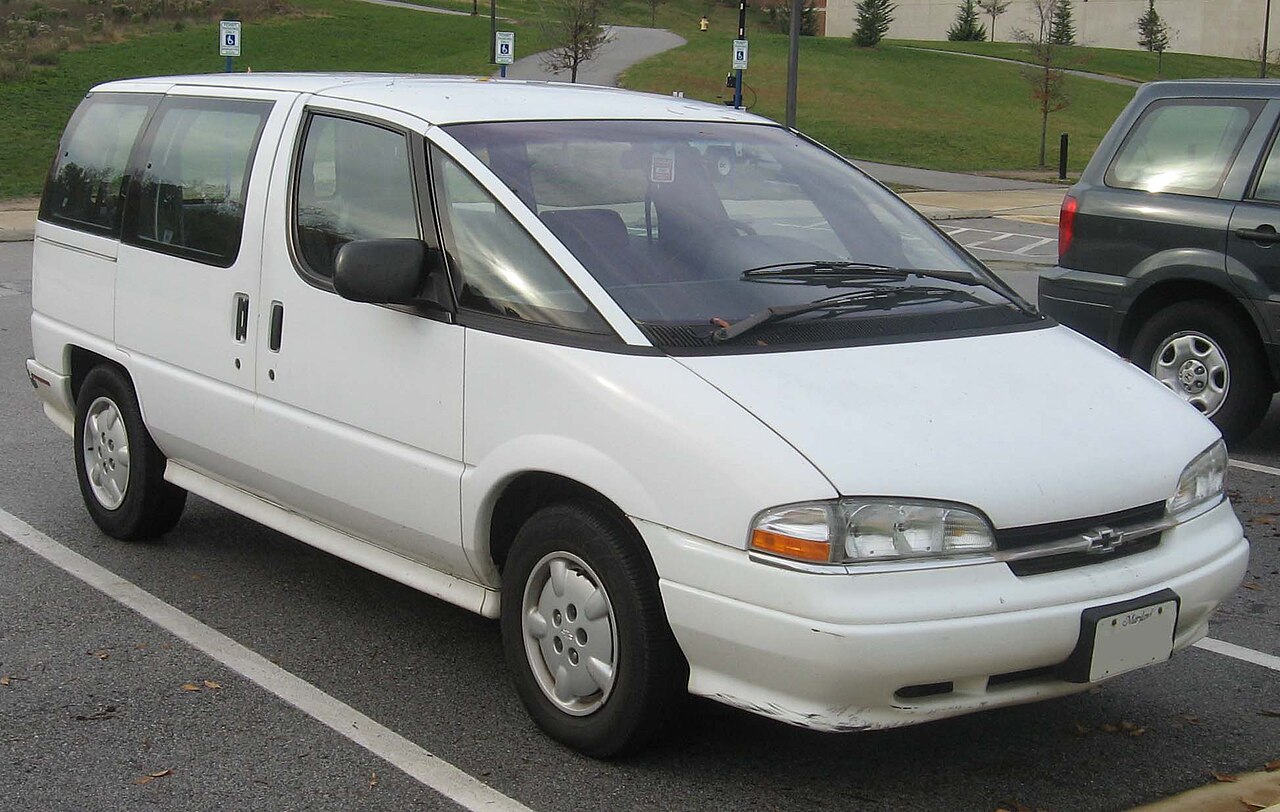
The restyled 1994 Lumina Minivan quietly made American automotive history: it was the first minivan sold in the US with a power sliding door you could open by remote.
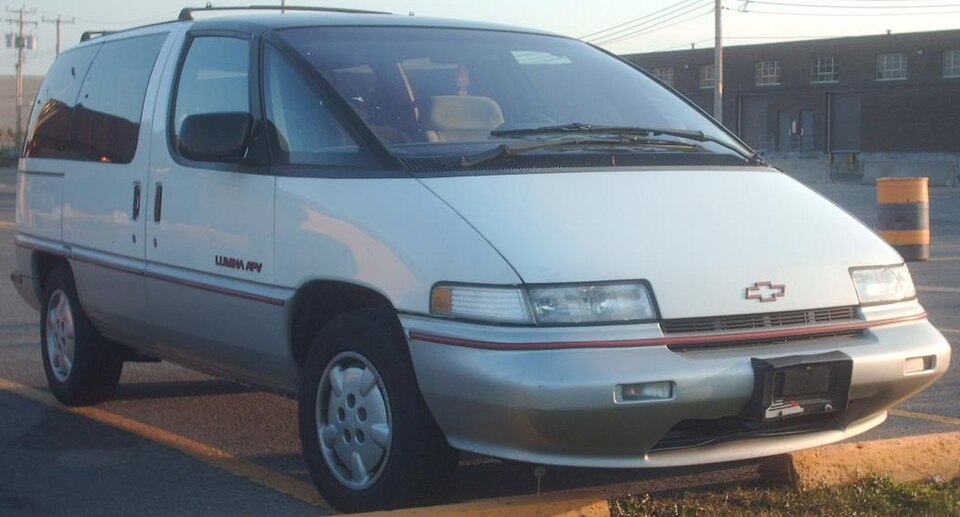
The first-generation Lumina APV minivan was nicknamed the "Dustbuster" by the press for its sharply sloped windshield, which pushed the dashboard far forward of the driver.
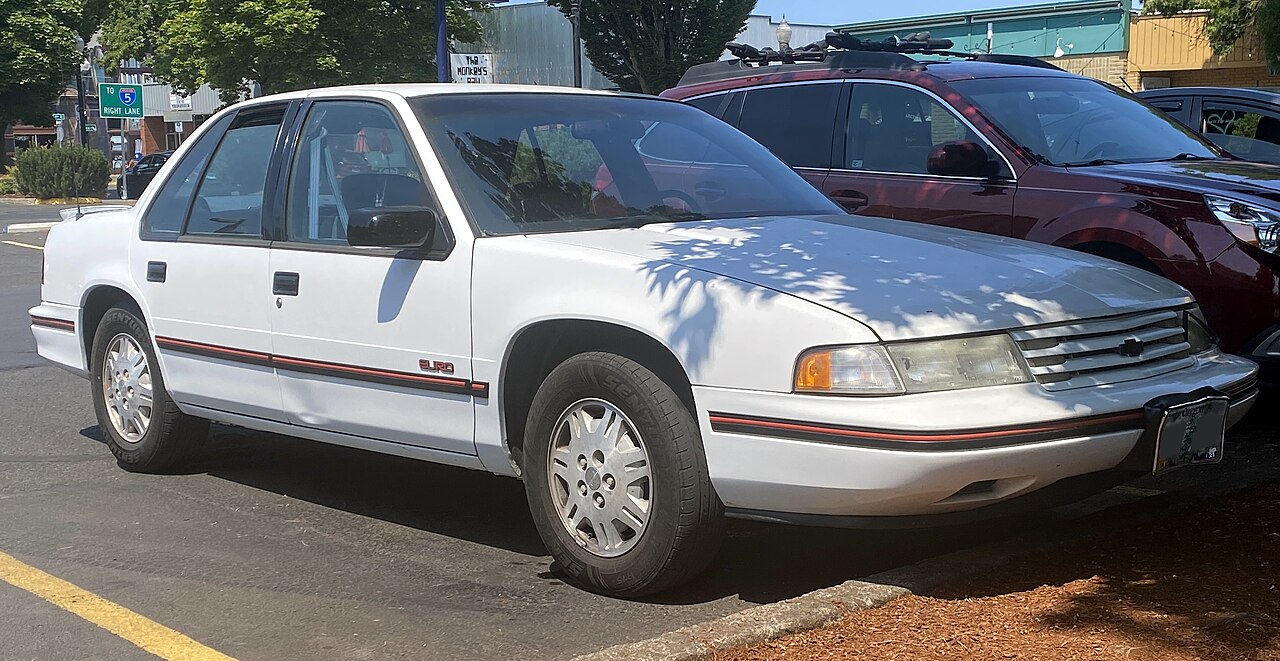
Its steeply sloped windshield gave the Lumina APV one of the deepest dashboards ever fitted to a mass-produced car.
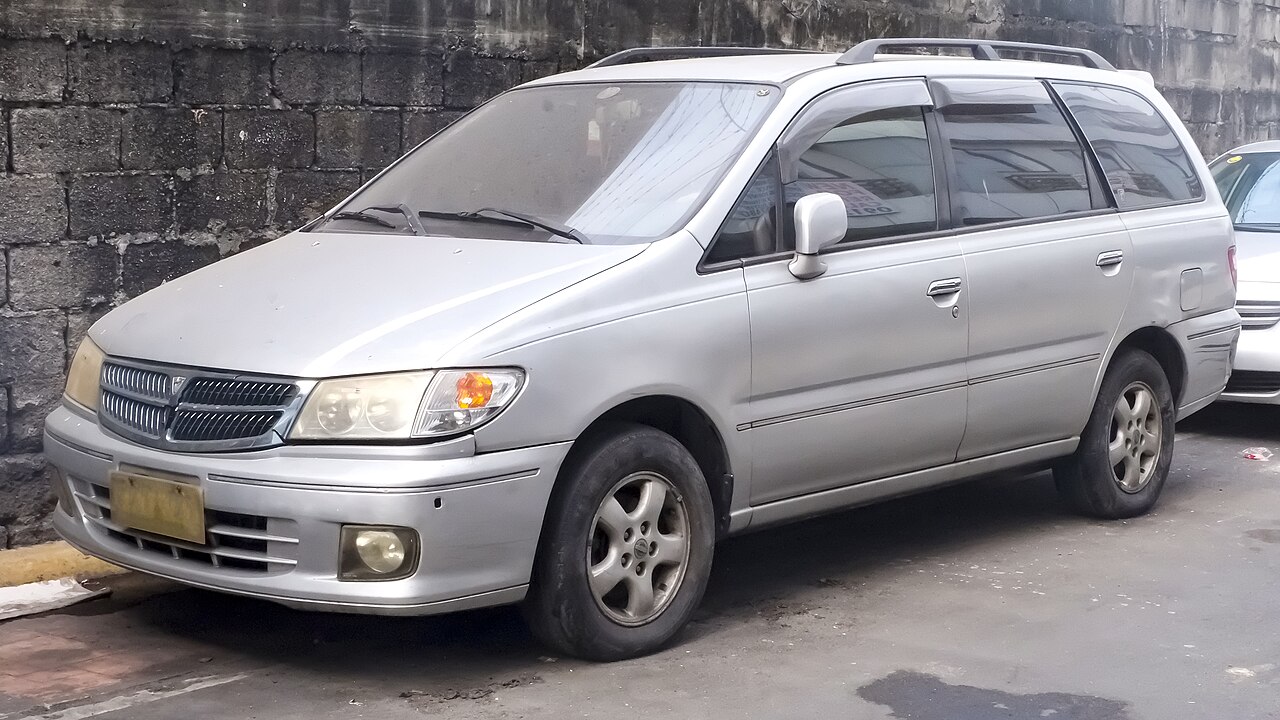
The first Presage wasn't really its own car underneath — most of its parts came straight from the Nissan R'nessa, with more shared with its platform twin, the Bassara.