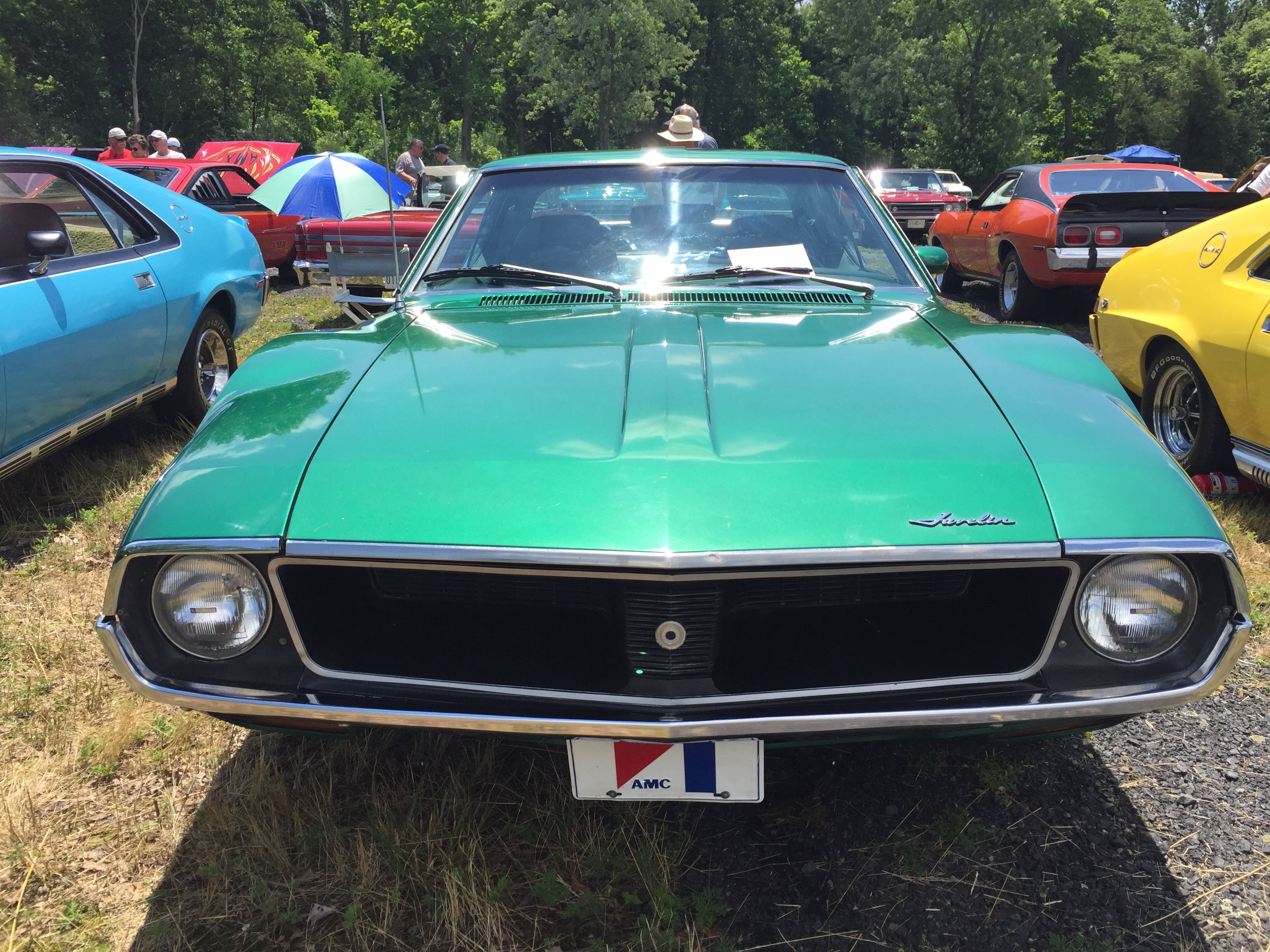
The second-gen AMX wasn't just a street car — it became the first pony car any American police force put on regular highway patrol duty.
Lead trim: 232 I6 (100 hp net) · up to 330 hp
American Motors Corporation Javelin1971–1974
- 0spots by members
- Unclaimednobody has spotted one yet
- 0sets it belongs to
Nobody in Burbles has spotted a American Motors Corporation Javelin yet. See one on the street, point the app at it, and the first card is yours — with your @handle permanently credited on this page.
FactThe second-gen AMX wasn't just a street car — it became the first pony car any American police force put on regular highway patrol duty.
The AMC Javelin was restyled for the 1971 model year, following the pony segment's trend to "bigger, beefier vehicles": a design purposely made to give the sporty car "individuality … even at the risk of scaring some people off", with a long hood sloping down at the front, raised blisters over the front wheels, flared rear fenders and "twin canopy" roof recesses, headed by Chuck Mashigan. Wheelbase grew 1 inch to 110 in, height dropped 1.08 in and width increased 3.31 in with a rear track 3.31 in wider "improving both looks and handling". The 1971 range ran from a 232 cu in I6 up to a 401 cu in V8 with a single four-barrel and a 9.5:1 compression ratio rated at 330 bhp and 430 lb·ft, with a BorgWarner T-10 four-speed and a Hurst shifter; the U.S. industry moved from gross to net SAE horsepower ratings in 1972, so the same engines carry lower figures from that year. The 1972 cars gained an "egg crate" grille, the base model was discontinued, Chrysler-sourced TorqueFlite automatics were badged "Torque-Command", and AMC's "Buyer Protection Plan" made it the first automaker to promise to repair anything wrong with the car (except tires) for one year or 12,000 miles; 4,152 Javelins were built with the optional Pierre Cardin interior in 1972 and 1973. For 1973 the taillights and grille were updated, the "twin-cove" roof indentations were eliminated, the SST was dropped and the car called simply Javelin, and the 401 was rated at a net 255 hp with 0–60 mph in 7.7 seconds and a top speed of 115.53 mph (1973 production 30,902 including 5,707 AMX). Front disc brakes became standard for 1974 and the last cars were built in October/November 1974 (22,556 Javelins plus 4,980 AMX in the final year), after the oil embargo, the 55 mph limit and rising insurance made pony cars less attractive and AMC needed the line for the Pacer. Javelins won the Trans-Am title in 1971, 1972 and 1976, and were sold as the Rambler Javelin in Venezuela and Australia and the VAM Javelin in Mexico. The AMX halo variant is catalogued as its own generation.
Collectors Spotted in the American Motors Corporation Javelin Lineage
No member has published a public street spot of the American Motors Corporation Javelin yet — the First · Worldwide stamp is wide open.
Trims & Figures
14 published trims in the catalogue. A blank is a figure not recorded, not zero.
| Trim | Years | Engine | Power | Torque | 0–60 | Drive | Gearbox | MSRP |
|---|---|---|---|---|---|---|---|---|
| 232 I6 (100 hp net) | 1972–1974 | 3.8 L Inline-6 | 100 hp | 185 lb-ft | — | RWD | — | — |
| 232 I6 (135 hp gross) | 1971–1971 | 3.8 L Inline-6 | 135 hp | 210 lb-ft | — | RWD | — | — |
| 258 I6 (110 hp net) | 1972–1974 | 4.2 L Inline-6 | 110 hp | 195 lb-ft | — | RWD | — | — |
| 258 I6 (150 hp gross) | 1971–1971 | 4.2 L Inline-6 | 150 hp | 240 lb-ft | — | RWD | — | — |
| 304 V8 (150 hp net) | 1972–1974 | 5.0 L V8 | 150 hp | 245 lb-ft | — | RWD | — | — |
| 304 V8 2-bbl (210 hp gross) | 1971–1971 | 5.0 L V8 | 210 hp | 300 lb-ft | — | RWD | — | — |
| 360 V8 2-bbl (175 hp net) | 1972–1974 | 5.9 L V8 | 175 hp | 285 lb-ft | — | RWD | — | — |
| 360 V8 2-bbl (245 hp gross) | 1971–1971 | 5.9 L V8 | 245 hp | 365 lb-ft | — | RWD | — | — |
| 360 V8 4-bbl (195 hp net) | 1972–1973 | 5.9 L V8 | 195 hp | 295 lb-ft | — | RWD | — | — |
| 360 V8 4-bbl (220 hp net) | 1974–1974 | 5.9 L V8 | 220 hp | 315 lb-ft | — | RWD | — | — |
| 360 V8 4-bbl (285 hp gross) | 1971–1971 | 5.9 L V8 | 285 hp | 385 lb-ft | — | RWD | — | — |
| 401 V8 4-bbl (255 hp net, 1972) | 1972–1972 | 6.6 L V8 | 255 hp | 345 lb-ft | — | RWD | — | — |
| 401 V8 4-bbl (255 hp net, 1973) | 1973–1973 | 6.6 L V8 | 255 hp | 345 lb-ft | 7.7 s | RWD | — | — |
| 401 V8 4-bbl (330 hp gross) | 1971–1971 | 6.6 L V8 | 330 hp | 430 lb-ft | — | RWD | — | — |
Owning one
We don’t estimate running costs for a car like this. What it costs depends on its condition, its specialist and how it is driven, and an average would mislead.
Owners’ builds
Nobody has claimed one yet.
Photographs
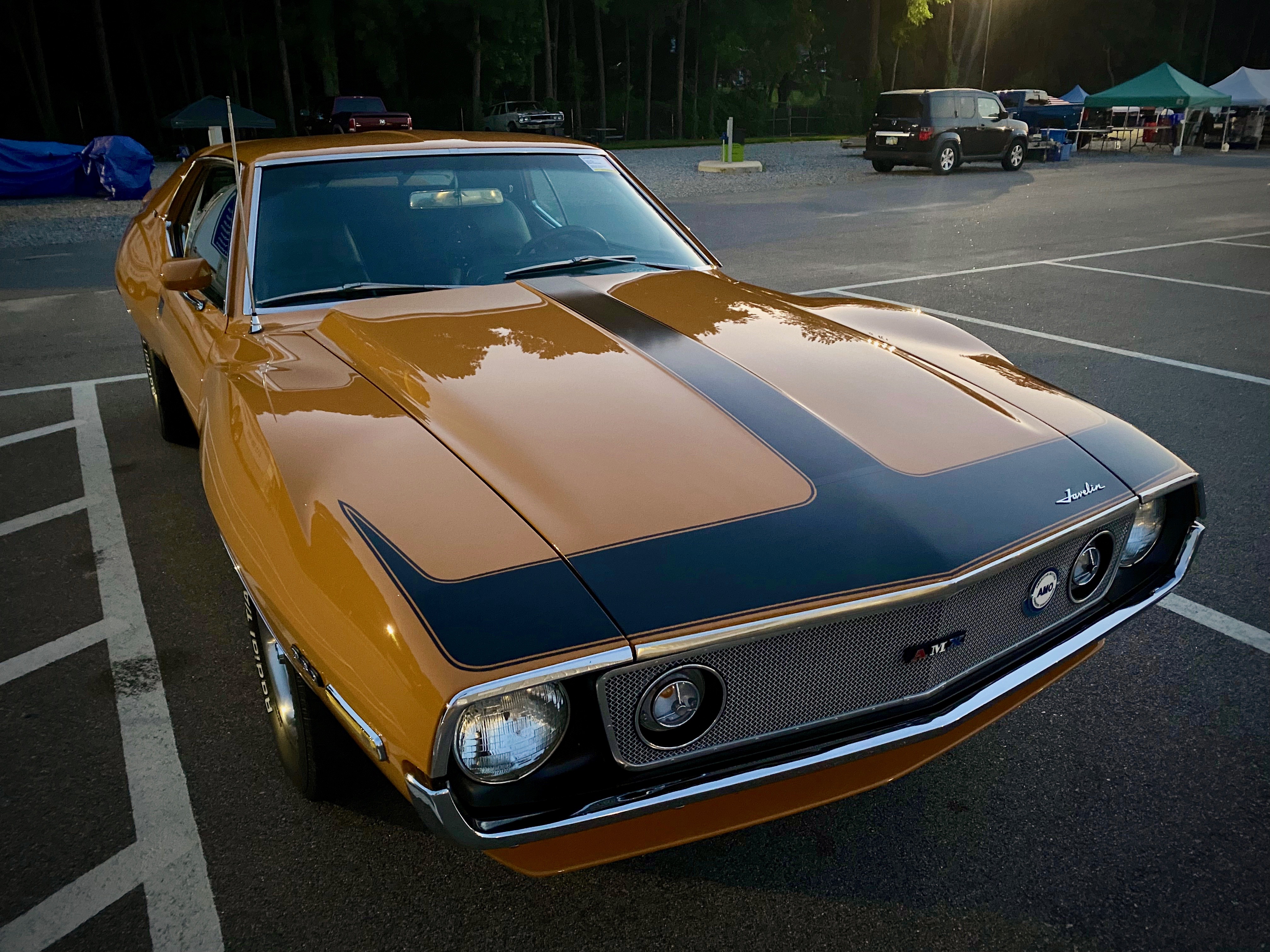
Penske actually tested it: the 1971 Javelin AMX's rear spoiler was measured adding 100 lb of real downforce at Ontario Motor Speedway.
The second-gen AMX wasn't just a street car — it became the first pony car any American police force put on regular highway patrol duty.
AMC unveiled the Javelin on the same day, August 9, 1967, that it discontinued the Rambler brand name in the US market.
Rivals
Same body, same money, other badges — tap any card to flip.
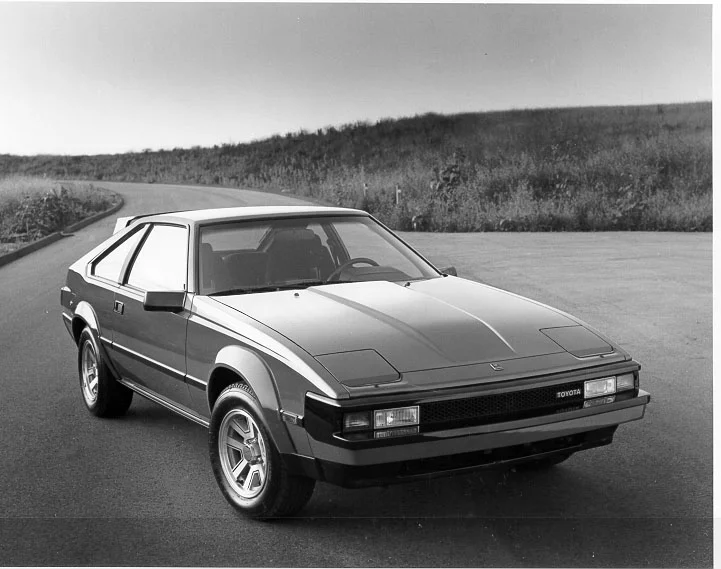
The Celica XX, Japan's name for the A60 Supra, introduced the world's first in-car navigation computer.
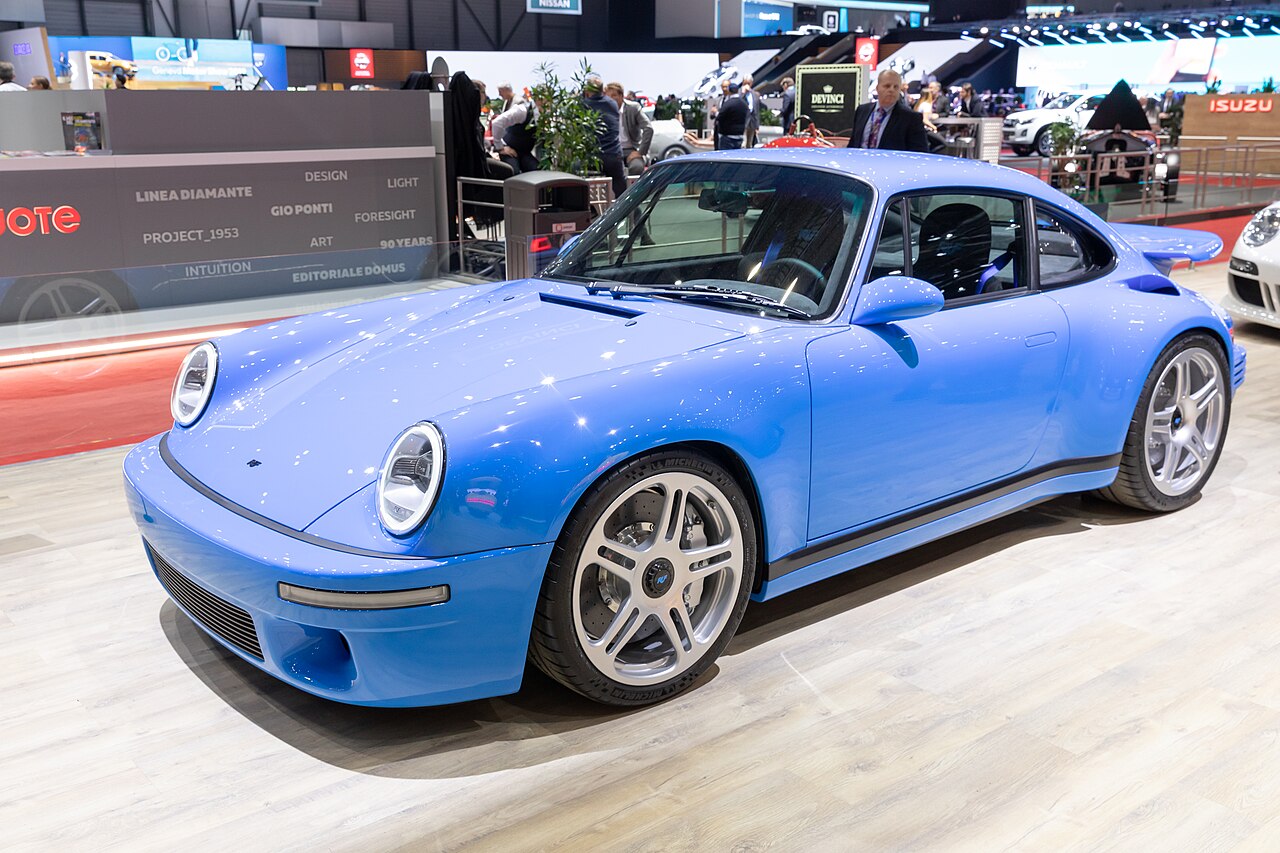
The CTR Anniversary looks like a 911 but Ruf built its carbon monocoque from scratch, no Porsche body underneath.
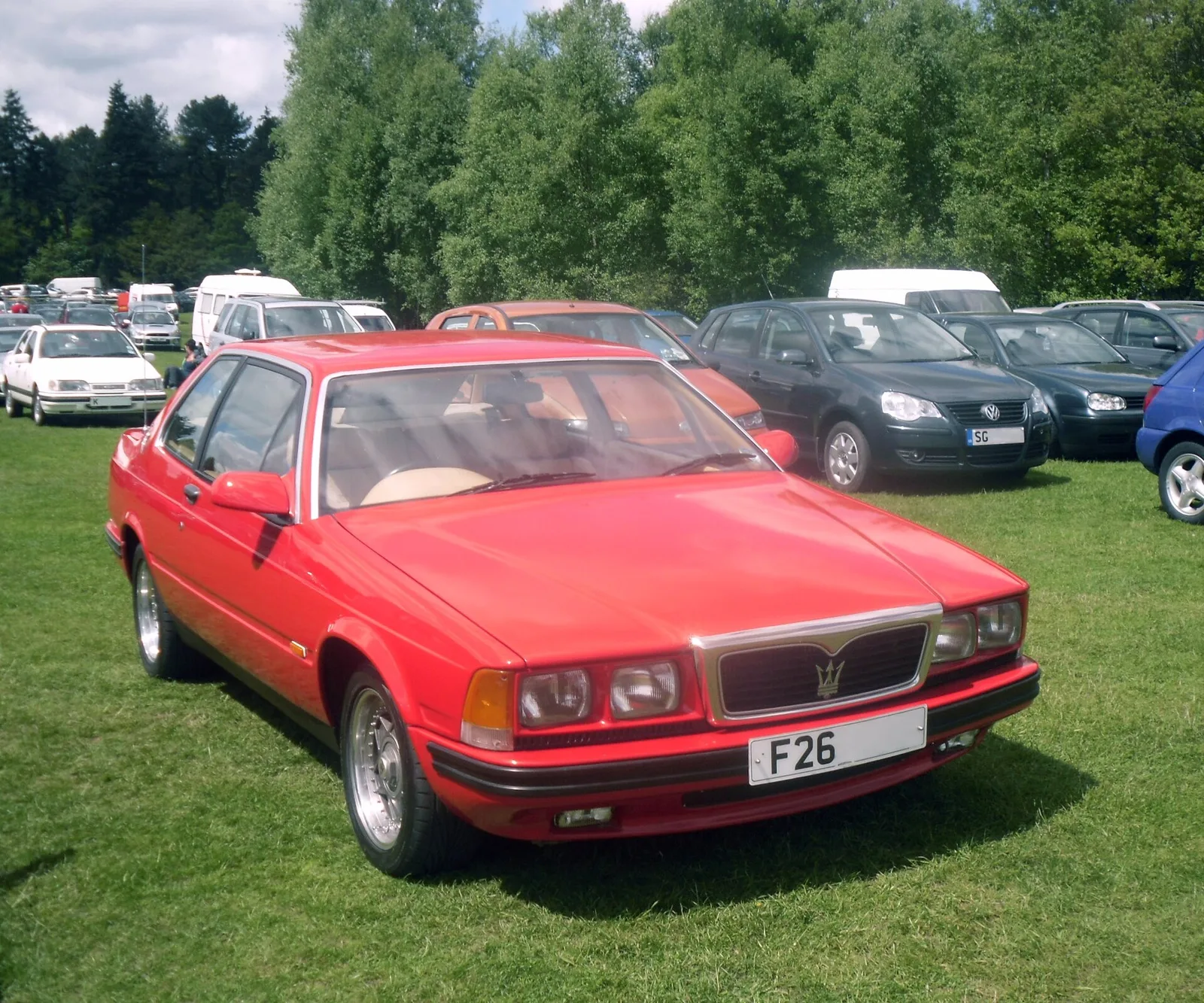
The 228's coupe styling hides a sedan underneath: Maserati stretched it onto the longer four-door Biturbo chassis to make room for its biggest V6, which is literally where the name comes from — 2-door, 2.8 litre.
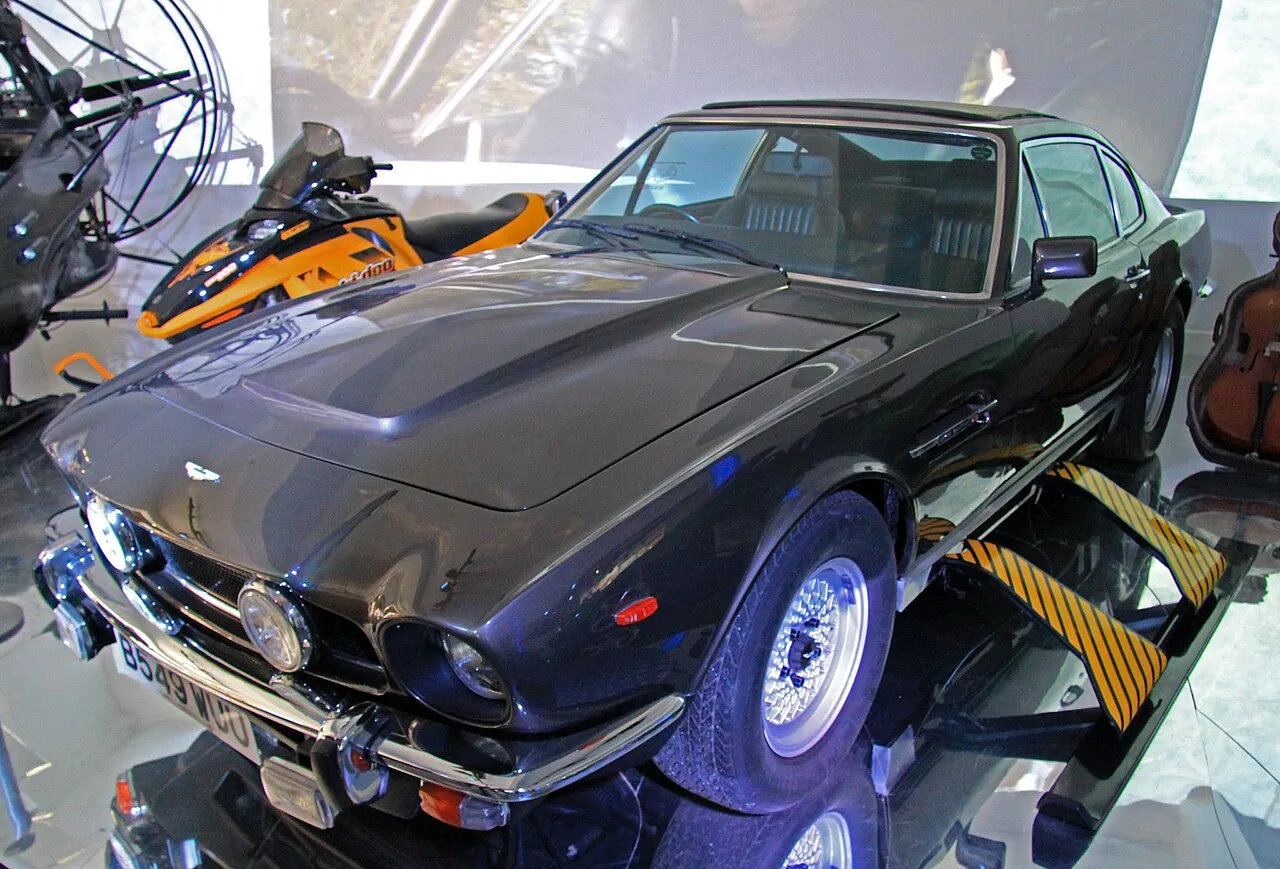
Switching to fuel injection let this V8 finally shed its trademark bonnet bulge — and only 405 of these flat-hooded Series 5 cars were built before the whole model retired in 1989.
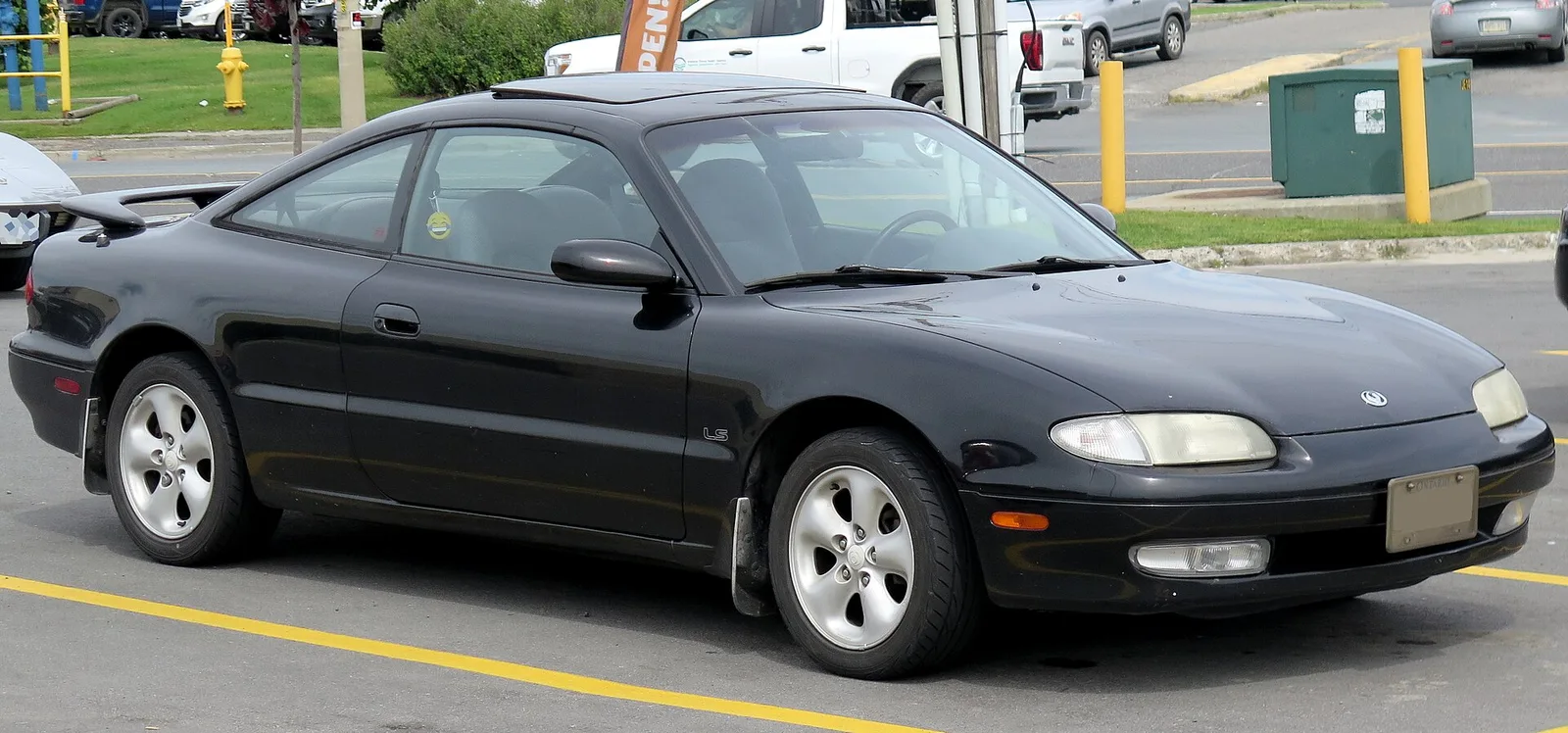
Japanese buyers got a secret weapon in their MX-6 — the JDM-only KL-ZE V6 made about 40 more horsepower than the engine sold in the exact same car in North America.
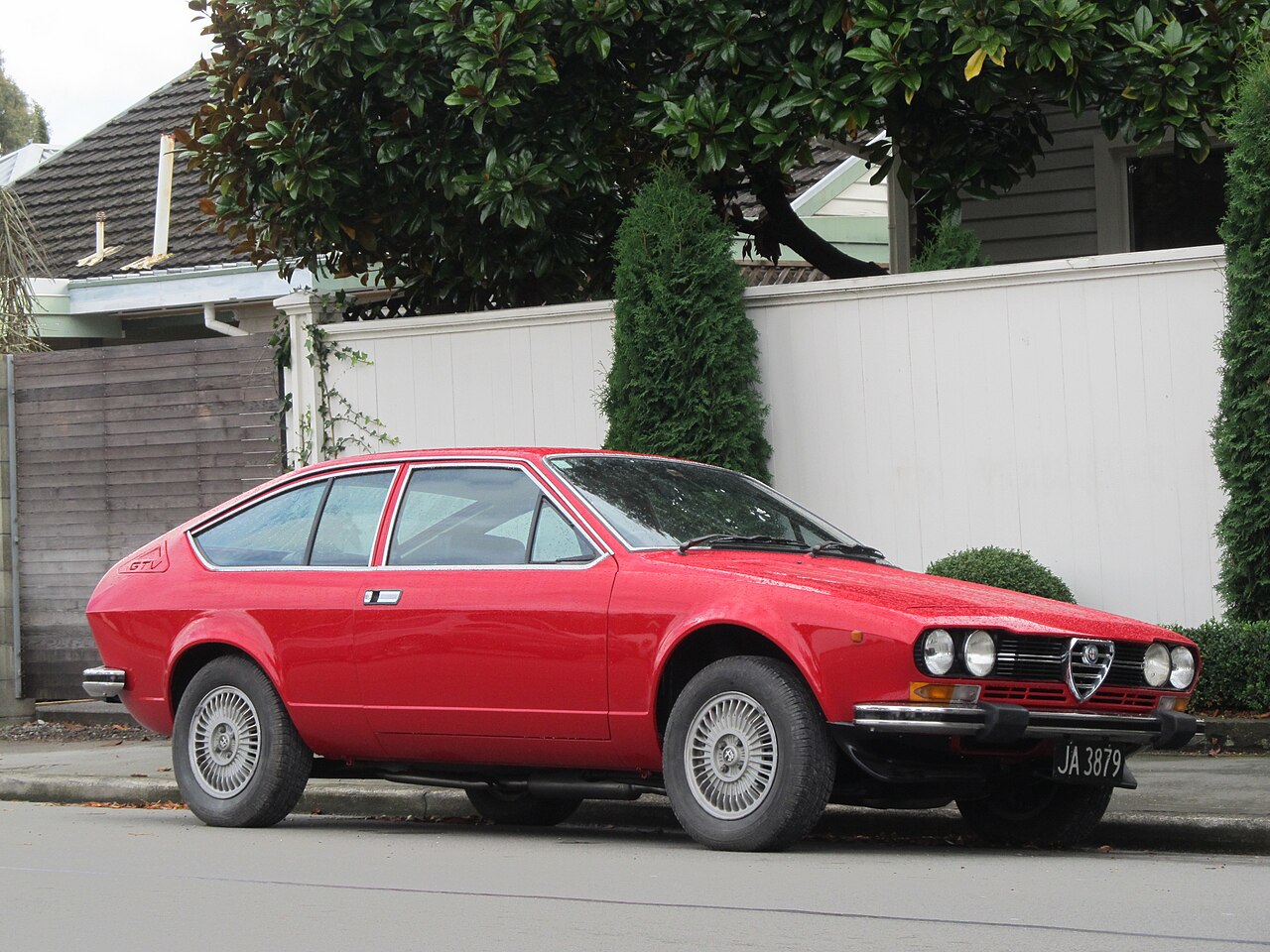
An American tuner, Callaway Cars, built twin-turbo conversions of the GTV6 that boosted its V6 by fifty percent to 230 hp — turning Alfa's grand tourer into something far quicker than the factory ever intended.
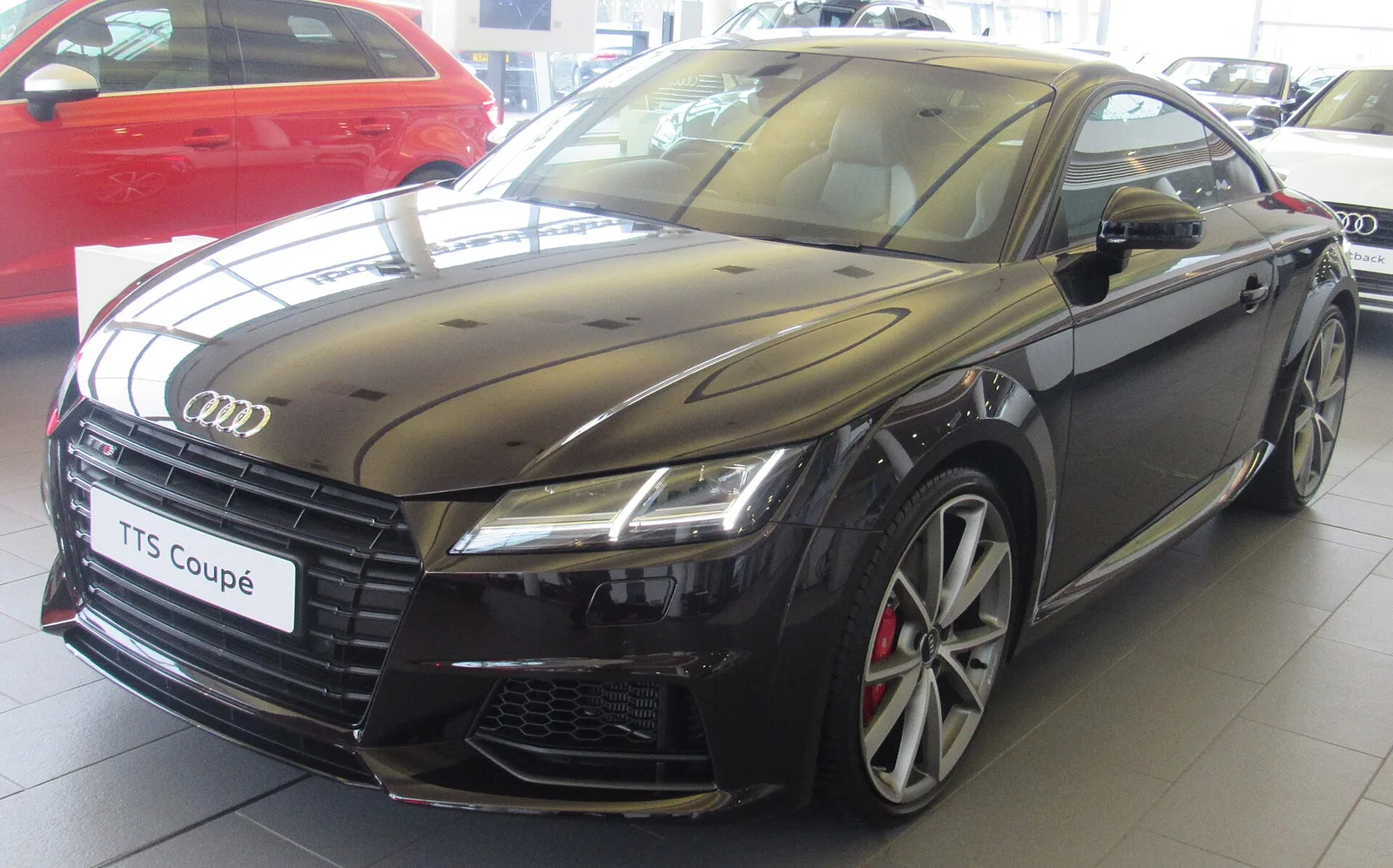
Audi TTS Coupe · TTS Coupe (2016–2023) · 2016–2023.
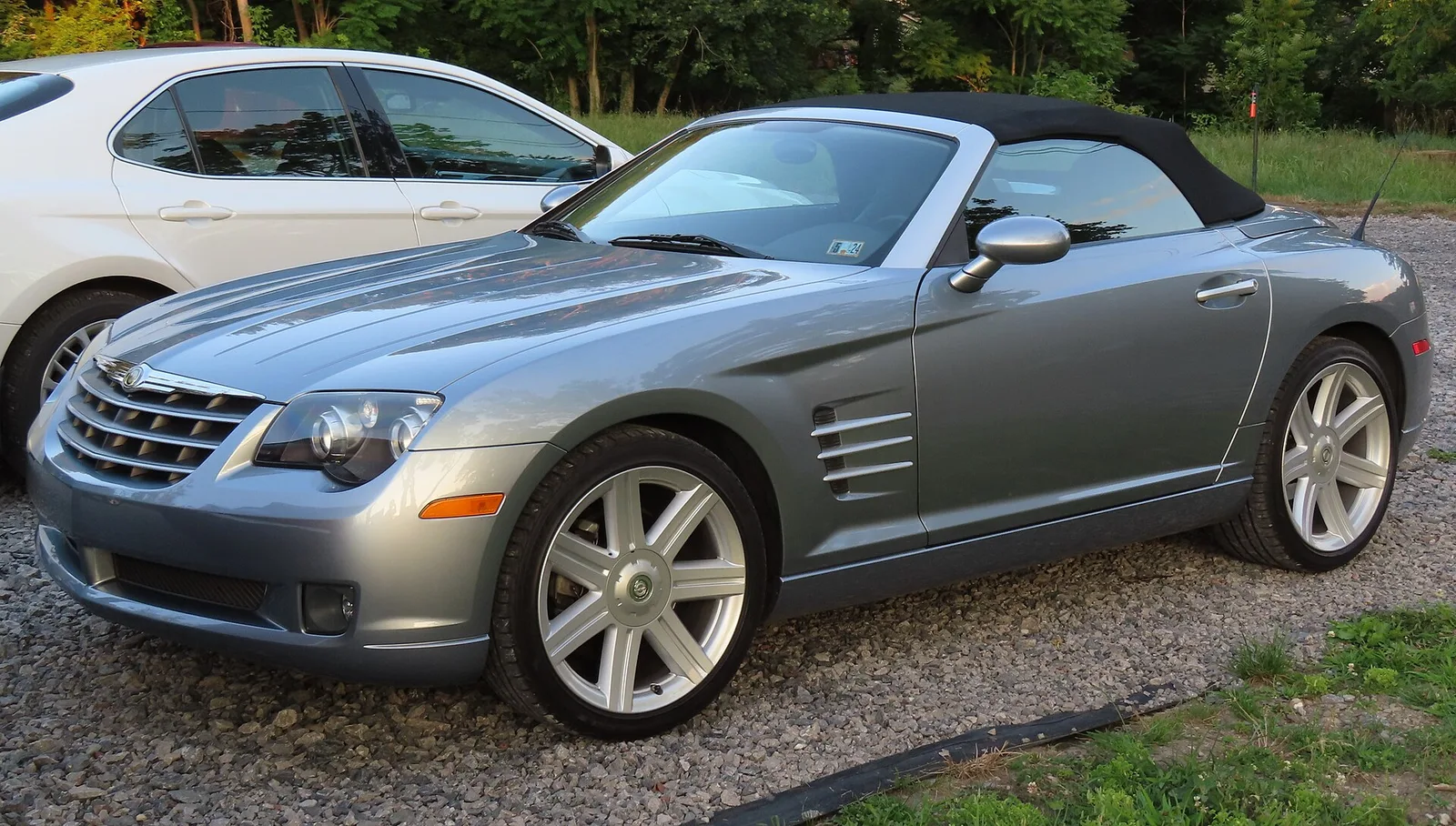
A product of the DaimlerChrysler merger, the Crossfire shares 80% of its parts with the Mercedes-Benz SLK — German bones under American badges.