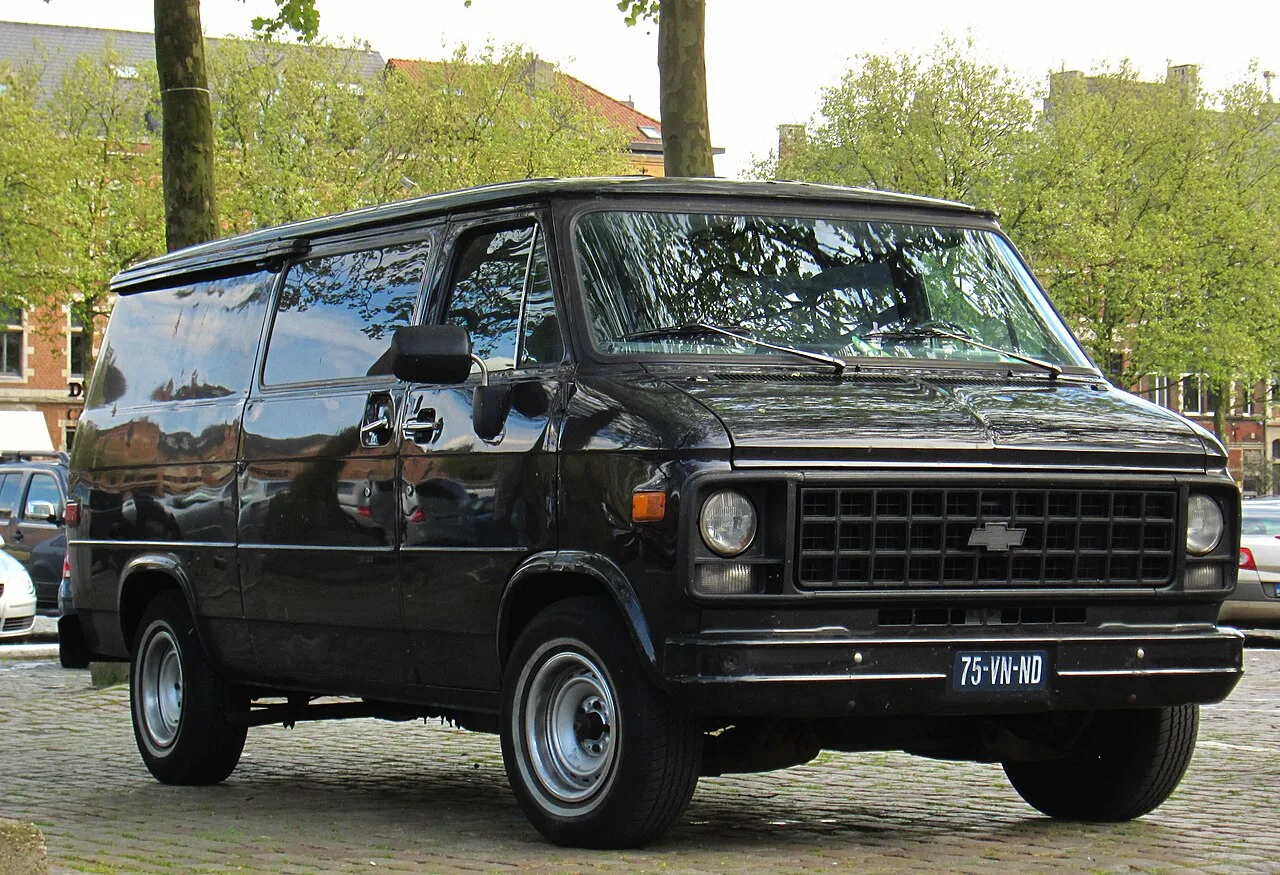
This G-series van stayed in production for 25 straight years — one of the longest production runs of any GM platform ever built.
Median 72 hp across 83 similar cars
Lead trim: Chevy Van 262 V6 (1985–1996) · up to 230 hp
Chevrolet Chevy Van G-seriesG-SERIES-1971 · 1971–1996
- 0spots by members
- Unclaimednobody has spotted one yet
- 0sets it belongs to
Nobody in Burbles has spotted a Chevrolet Chevy Van G-series yet. See one on the street, point the app at it, and the first card is yours — with your @handle permanently credited on this page.
FactThis G-series van stayed in production for 25 straight years — one of the longest production runs of any GM platform ever built.
GM introduced the third-generation G-series vans as 1971 model-year vehicles in a complete redesign that adopted a front-engine layout with a conventional hood, deriving its mechanical components from the C/K pickup trucks; the launch advertising ("Chevrolet launches the space vehicle") emphasized interior space, and in 25 years of production it became one of the longest-produced vehicle platforms designed by GM. It kept unibody construction with the frame rails integrated into the floorpan, but the leaf-sprung front axle gave way to independent front suspension with coil springs and control arms, the rear kept a leaf-sprung solid axle, and front disc brakes replaced the four drums (four-wheel anti-lock braking became standard in 1993). Three wheelbases were offered, 110, 125 and 146 inches (146 inches for cutaways from 1971 to 1989, and a single-rear-wheel extended van from 1990 seating 15). The line was sold in half-ton, three-quarter-ton and (new) one-ton series by both Chevrolet and GMC, as the Chevy Van cargo van and Sportvan passenger van (with the Beauville top trim from 1971 to 1996, the Bonaventure in between in the 1980s, the five-passenger Nomad from 1977 to 1981 and the two-seat Caravan package from 1977 to 1980) and the GMC Vandura and Rally. Powertrain history from the page: 1971 launched with the 250 six and two V8s, the 307 optional on half-ton vans and the 350 on three-quarter- and one-ton; the Powerglide was dropped after 1972; the 307 was discontinued for 1974, replaced by a 2-barrel 350 in half-ton vans; for 1976 the 292 six became standard in three-quarter- and one-ton vans, a 305 replaced the 350 2-barrel in half-ton vans and a 400 became offered in three-quarter- and one-ton vans; the 292 was dropped in 1978 and the 400 in 1981; a 6.2 L diesel V8 was the first diesel option in 1982; a 4.3 L V6 replaced the 4.1 L six as standard for 1985; the V6 got throttle-body injection in 1987, with the V8s following; a fuel-injected 7.4 L V8 was offered on the 3500 series for 1988, the first big-block in the line; manual transmissions were discontinued for 1990 and the four-speed automatic became standard; the diesel grew to 6.5 L in 1994; for 1996 the "G-Classic" was offered only as a one-ton G30 with the 5.7 V8 standard. The half-ton passenger van was withdrawn for 1994, the last G-series van was built in June 1996 alongside its GMT600 successor, and sales ended in California for 1996. Width 79.5 in; wheelbase and length vary by body (110, 125 and 146 in; 178.2, 202.2 and 223.2 in), and the page gives no power figures for this generation, so none are entered. Each engine's years are those in the page's engine table.
Collectors Spotted in the Chevrolet Chevy Van Lineage
No member has published a public street spot of the Chevrolet Chevy Van yet — the First · Worldwide stamp is wide open.
Trims & Figures
10 published trims in the catalogue. A blank is a figure not recorded, not zero.
| Trim | Years | Engine | Power | Torque | 0–60 | Drive | Gearbox | MSRP |
|---|---|---|---|---|---|---|---|---|
| Chevy Van 250 I6 (1971–1984) | 1971–1984 | 4.1 L Inline-6 | — | — | — | RWD | — | — |
| Chevy Van 262 V6 (1985–1996) | 1985–1996 | 4.3 L V6 | 155 hp | 230 lb-ft | — | RWD | — | — |
| Chevy Van 292 I6 (1975–1978) | 1975–1978 | 4.8 L Inline-6 | — | — | — | RWD | — | — |
| Chevy Van 305 V8 (1976–1995) | 1976–1995 | 5.0 L V8 | — | — | — | RWD | — | — |
| Chevy Van 307 V8 (1971–1973) | 1971–1973 | 5.0 L V8 | — | — | — | RWD | — | — |
| Chevy Van 350 V8 (1971–1996) | 1971–1996 | 5.7 L V8 | — | — | — | RWD | — | — |
| Chevy Van 379 (6.2 L) diesel V8 (1982–1993) | 1982–1993 | 6.2 L V8 | — | — | — | RWD | — | — |
| Chevy Van 395 (6.5 L) diesel V8 (1994–1996) | 1994–1996 | 6.5 L V8 | — | — | — | RWD | — | — |
| Chevy Van 400 V8 (1976–1980) | 1976–1980 | 6.6 L V8 | — | — | — | RWD | — | — |
| Chevy Van 454 V8 (1988–1996) | 1988–1996 | 7.4 L V8 | 230 hp | 385 lb-ft | — | RWD | — | — |
Owning one
An estimate, for the Chevy Van 250 I6 (1971–1984) trim: fuel on its EPA figure and a dated national price, upkeep on a per-mile average for the kind of car it is.
Owners’ builds
Nobody has claimed one yet.
Photographs
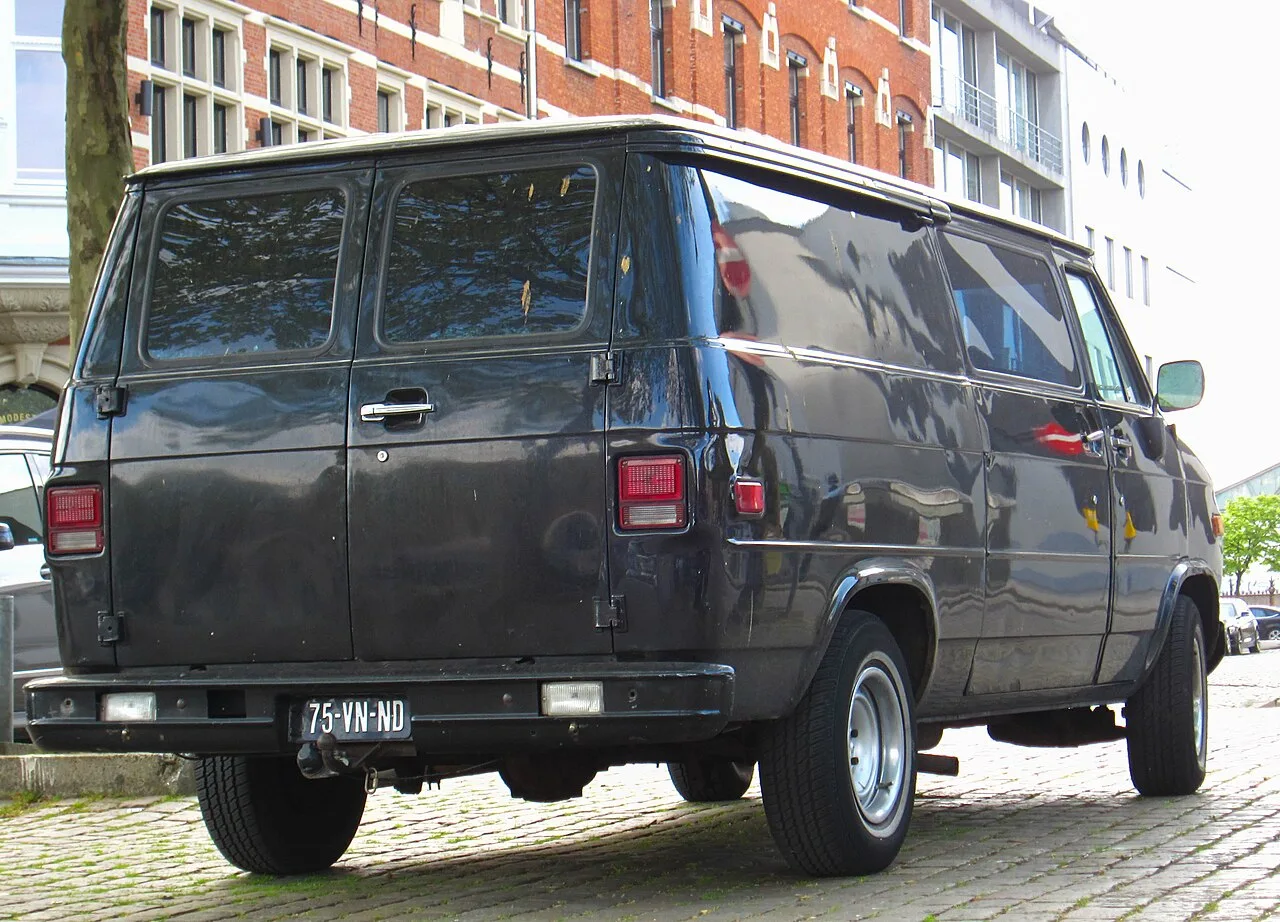
This G-series van stayed in production for 25 straight years — one of the longest production runs of any GM platform ever built.
Adding an optional V8 to this Chevy Van meant redesigning the fuel system too — the tank grew from 16 gallons to 24.5 to keep up with the bigger engine's thirst.
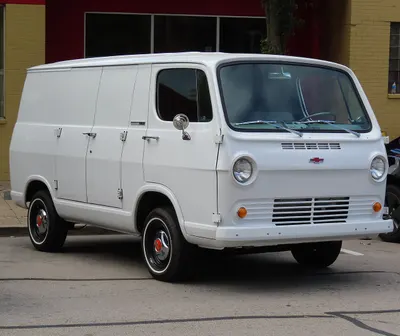
The 1964 Chevy Van shipped with exactly one seat — the driver's. A front passenger seat that actually stayed bolted down was an extra-cost option.
Rivals
Same body, same money, other badges — tap any card to flip.
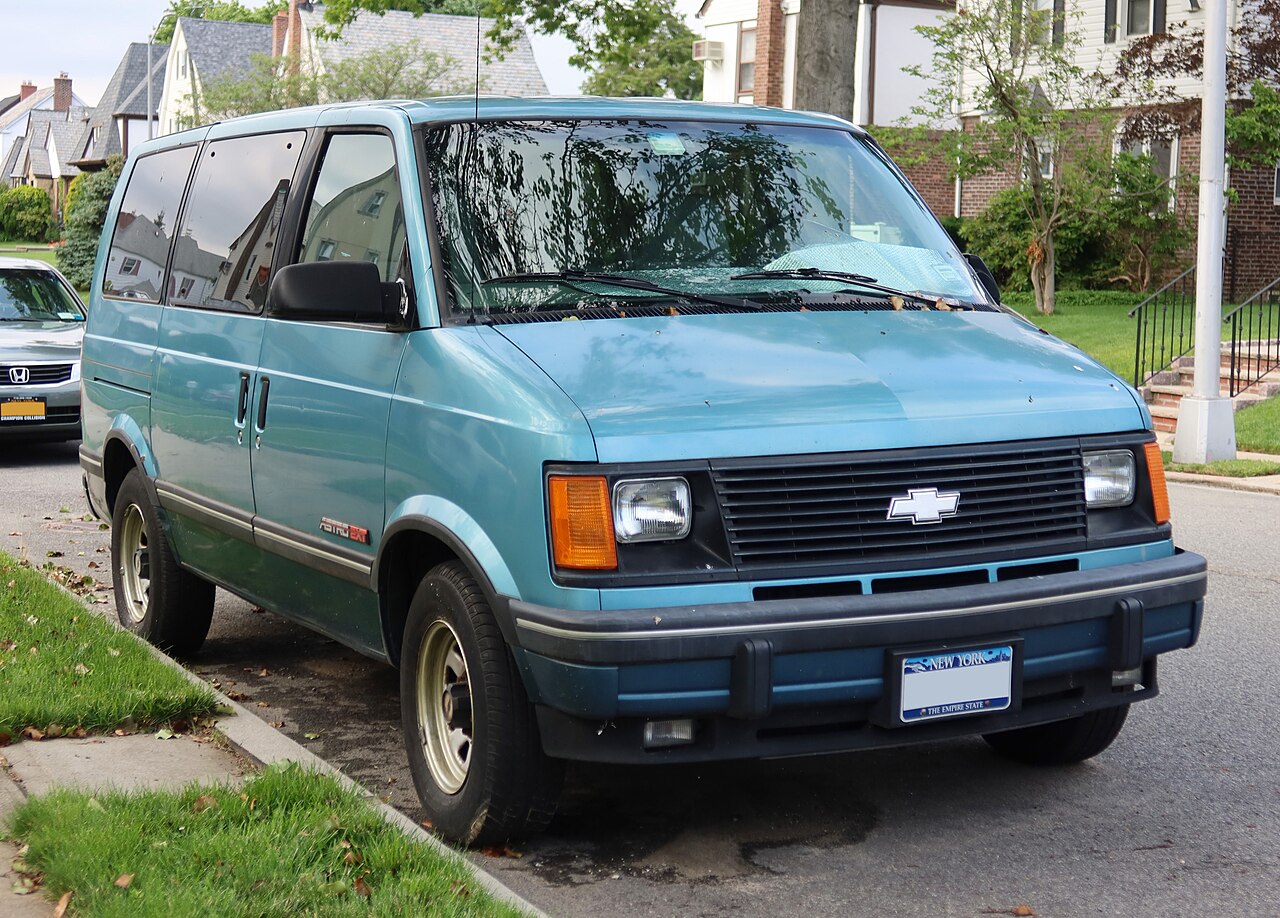
Chevy pitched the Astro as the anti-minivan, telling buyers life was too big for one, while it rode on a rear-wheel-drive truck frame.
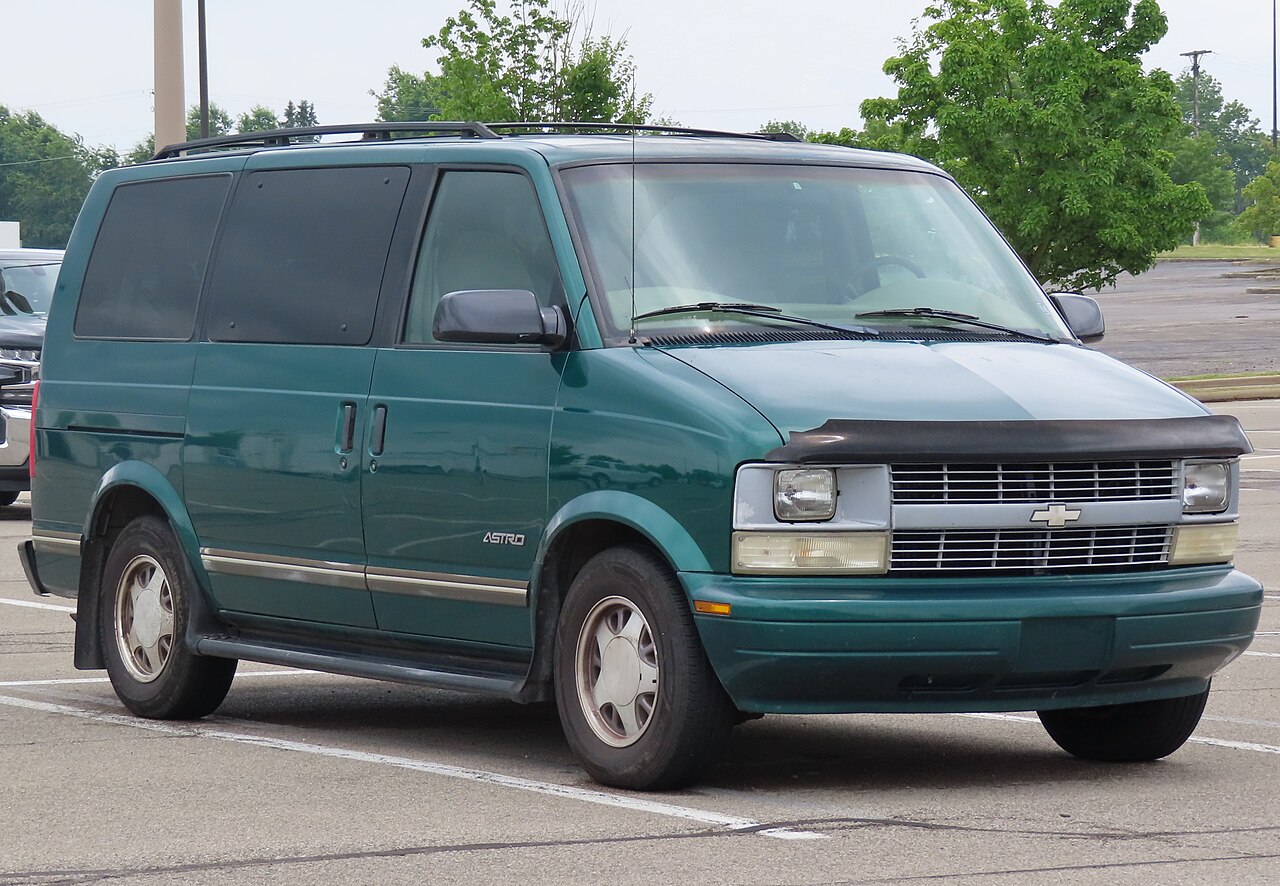
The IIHS rated the Astro Poor in a 1996 crash test, yet 2001–2004 Astros later had the lowest driver death rate of any US passenger vehicle.
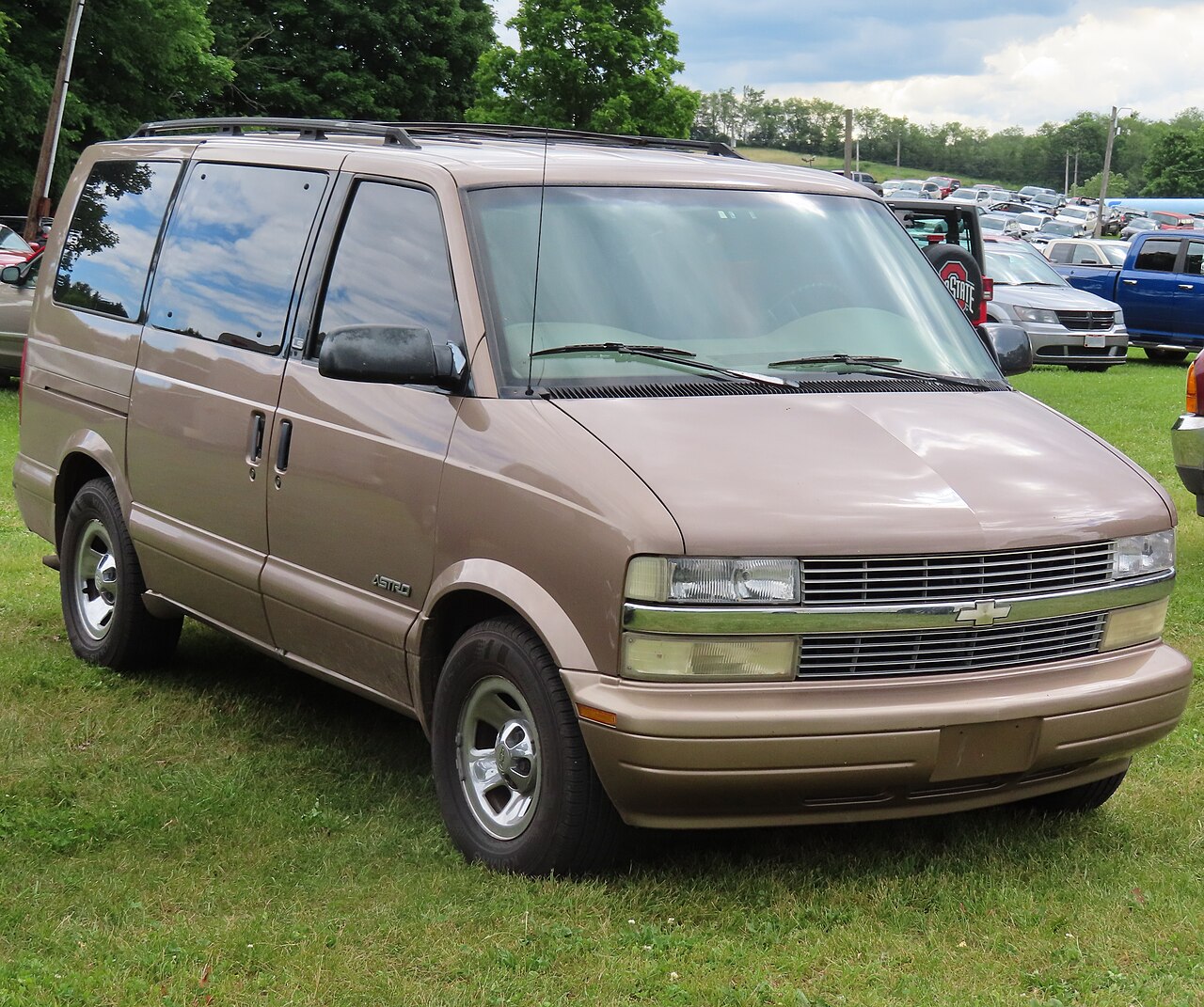
The boxy, unglamorous Astro quietly posted one of the best real-world safety records in America: IIHS found 2001-2004 models had the fewest driver deaths per million vehicles of any passenger vehicle on US roads.

The third-generation Tourneo Connect, released in Europe in October 2021, is a rebadged fourth-generation Volkswagen Caddy, assembled by Volkswagen in Poland.
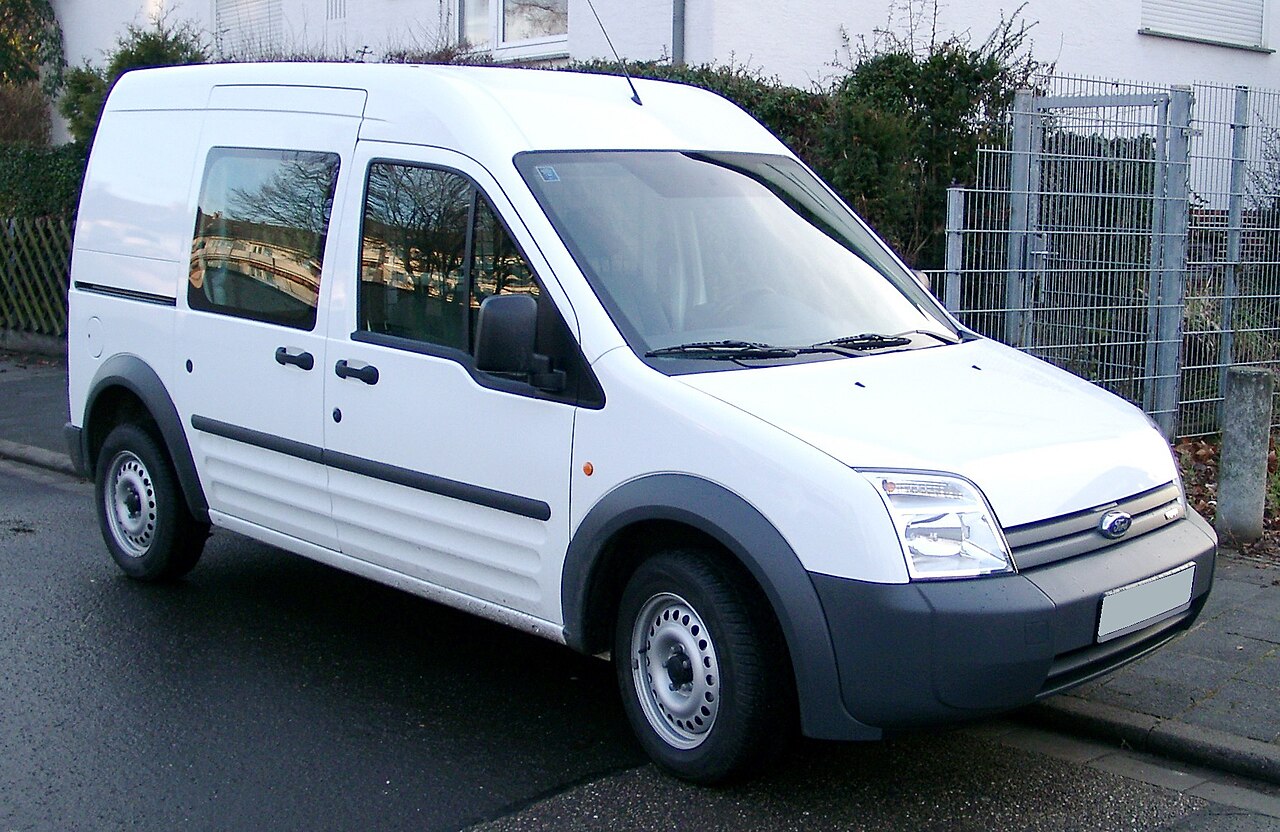
Ford beat the 25% "chicken tax" by importing the Transit Connect as a passenger van — rear windows and seats included, then stripped out and recycled once it landed in the US.
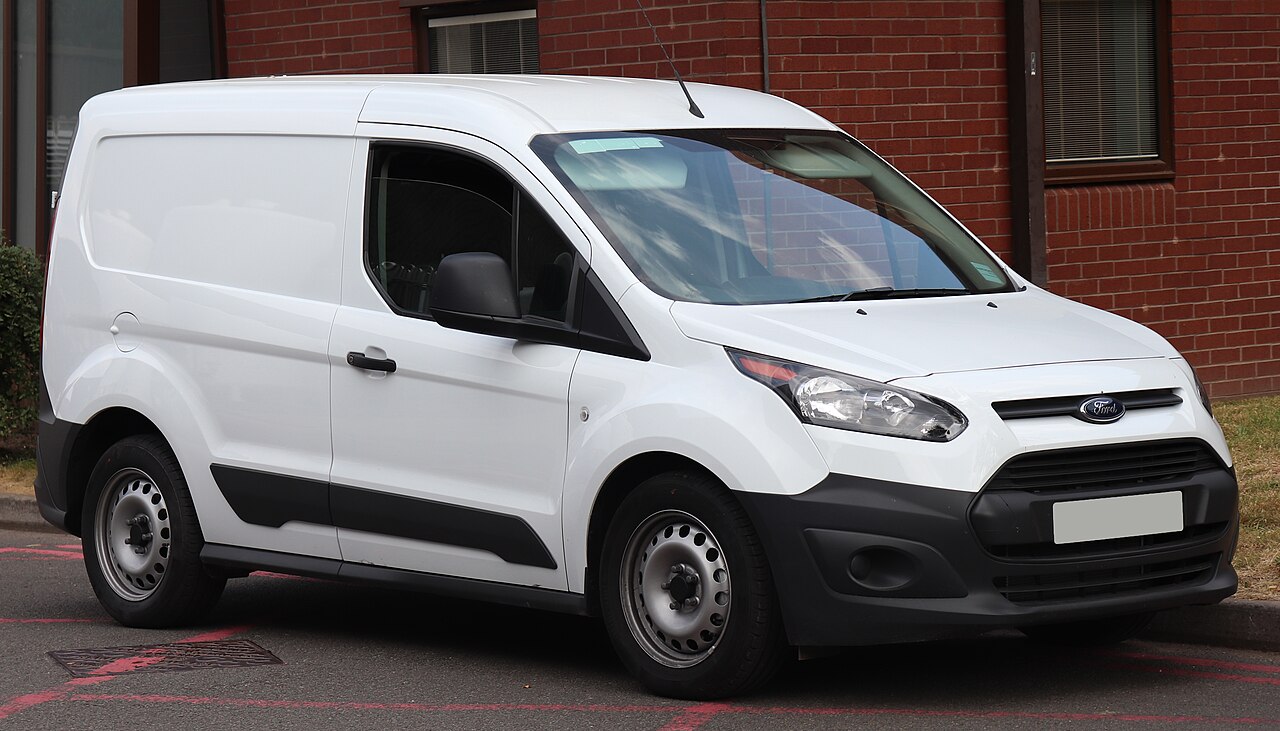
Ford spent years in federal court over the second-gen Transit Connect: in June 2019 the US won its appeal, and judges ruled the van was cargo-only — ending Ford's workaround for the 'chicken tax.'
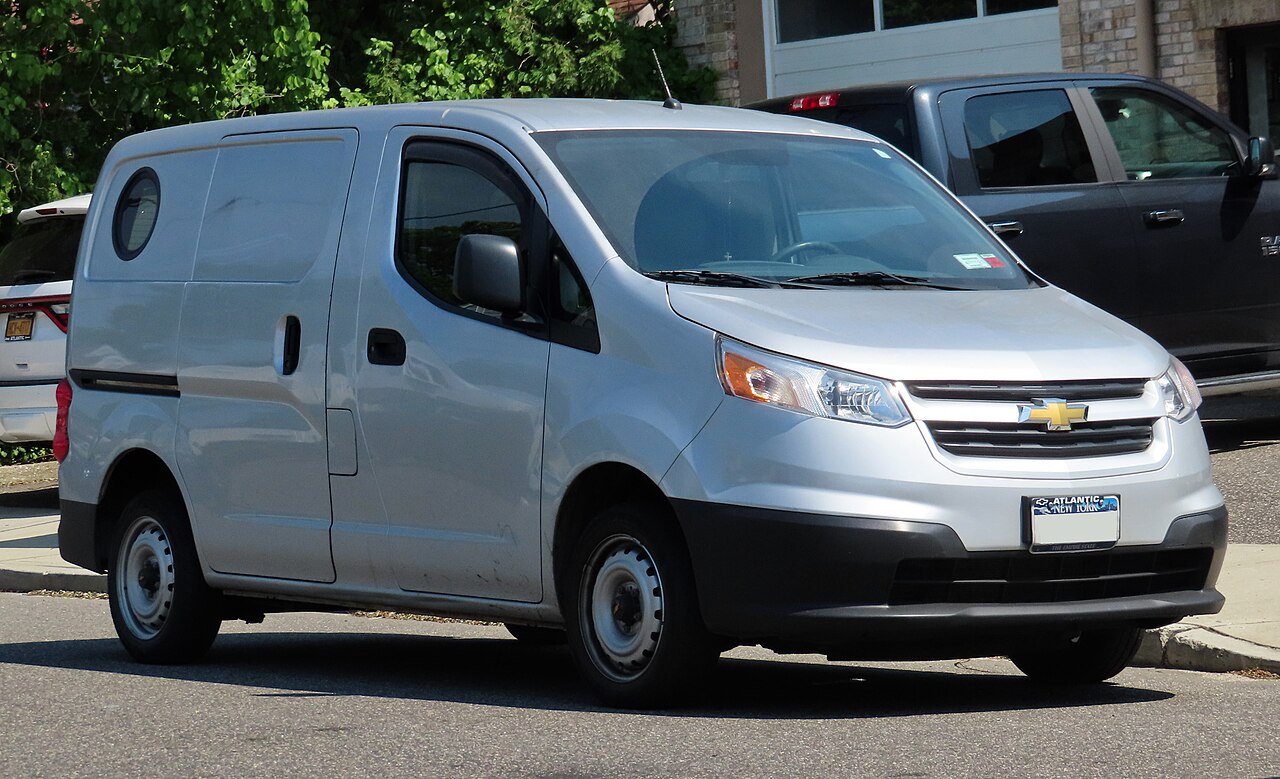
GM sold a rebadged Nissan NV200 as the Chevy City Express for four years, then killed it in 2018, citing weak sales and the fact that its parts weren't even compatible with GM's own parts catalog.

Its name is a pun: "S-Cargo" means "Small Cargo" but sounds just like escargot — French for snail, the shape the whole van was built to resemble.